
Articles featuring Chris Rowbury | LeisureCourses.net - short courses & residential study breaks in great locations - Part 2
-
Can singing together bring about world peace?
Listed on December 21, 2015 by Chris Rowbury in Blogs!The world can be a terrible place sometimes as we’ve seen in the news lately. It’s hard to imagine how a single person can make a difference.
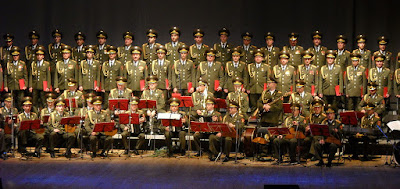 Chór aleksandrowa 2009 by Loraine
Can singing together or being in a choir bring about change?
Most of us ask ourselves at some point: am I contributing to the world, how can I help others, am I doing enough?
It can be overwhelming to think of all the troubles in the world and how you, just one person, can possibly make a difference.
I sometimes feel like I’m putting my head in the sand when I am leading a singing workshop or a choir. It all seems so frivolous and irrelevant compared to the horrors of the world.
But it’s what I do and I have a passion for it. I know that singing and music has the capacity to heal and to connect people, but is it enough to change the world?
Here is what I’ve come up with.play to your strengths
As individuals we can’t do everything. We have to focus on one or two things and do them well, whether that be driving provisions to refugee camps in Calais, or manning phones for humanitarian funding appeals.
We should play to our strengths. Some people are great at logistics — organising supplies and volunteers — whilst others are brilliant to persuading people to donate to good causes.
My strengths are as a teacher of songs and choir leader. They may not seem to be practical skills that can help the world directly, but it’s what I have to offer and I think I can justify it.
I am constantly reminded by participants in my choirs and workshops of the joy that singing together brings. Participants are truly lifted by the communion and community and by building something together without any barriers of gender, class, race, religious belief, etc.
Singing together helps to ground, relax and uplift the participants. They get to take a break from the everyday and can’t help but be in the moment.
I take solace from the fact that they then take some of that joy away with them and are re-energised to do what they do best and so it gets passed on.
A similar sentiment is expressed here more eloquently:
“The point is, art never stopped a war and never got anybody a job. That was never its function. Art cannot change events. But it can change people. It can affect people so that they are changed...because people are changed by art - enriched, ennobled, encouraged - they then act in a way that may affect the course of events...by the way they vote, they behave, the way they think.” Leonard Bernstein, composer and conductor (1918 – 1990)some inspiring quotes
Here are a few inspiring quotes from musicians about how music can help to bring about peace.
“People who make music together cannot be enemies, at least while the music lasts.” Paul Hindemith, composer and violinist (1895 – 1963)
“Songs won’t save the planet, but neither will books or speeches.” Pete Seeger, singer and activist (1919 – 2014)
“Radicalism and intolerance are the products of ignorance … This is why the best way to fight radicalism is to turn ignorance into knowledge by giving the ‘other’ a name, a face and a voice. Singing in a foreign language enables us to do just that.” María Fernández-Toro of Multilingual Singing.
“In times of totalitarian or autocratic rule, music (indeed culture in general) is often the only avenue of independent thought. It is the only way people can meet as equals, and exchange ideas. Culture then becomes primarily the voice of the oppressed and it takes over from politics as a driving force for change.” Daniel Barenboim, pianist and conductor, co-founder of the West-Eastern Divan Orchestra (1942 – )
“Playing For Change is a movement created to inspire and connect the world through music. The idea for this project came from a common belief that music has the power to break down boundaries and overcome distances between people.” Playing For Change
I wish you all a peaceful Christmas.Chris Rowbury
Website: chrisrowbury.com
Facebook: Facebook.com/ChrisRowbury
Twitter: Twitter.com/ChrisRowbury
Monthly Music Roundup: Tinyletter.com/ChrisRowburyRead more ...
-
Perfect presents for choral singers
Listed on December 14, 2015 by Chris Rowbury in Blogs!It’s that time of year again (actually, it’s not: Christmas is 10 days away yet) and you still have time to shop for presents.
What on earth can you get for the choral singers in your life? Here are some super ideas for ideal presents.
Pretty much every magazine gets in on the act for the festive season with ideas for presents for garden lovers, those who play sports, grannies, book fiends and so on, but somehow they always seem to miss out choral singers (they also miss out choir leaders, but I wrote about them last week: Ideal presents for the choir leader in your life).
Well, I’m here to redress the balance. Here are 10 amazingly wonderful ideas for gifts for choral singers. Get ’em while you can,I’m sure there’ll be a rush!- an alarm clock – to make sure they get to rehearsals on time (and to come in at the right time when they’re singing).
- a cloak of invisibility – so they don’t get singled out by the choir leader and so they can avoid the warm up without their absence being noted.
- a stand-in – to attend rehearsals in their place when they’re feeling a bit tired or under the weather (or just not inclined). The stand-in will not be required at concerts as that’s where our choral singers soak up the limelight.
- a single ear plug – which works in either ear to block out all the unsolicited advice from other singers in their section.
- a heads-up display unit – to project song lyrics in front of them without anybody else noticing.
- a spikey jacket – covered in very sharp points to stop other choir members from encroaching on their personal space. Especially useful in concerts in small venues.
- a Taser stun gun – to zap anyone who’s talking while they’re trying to learn their part. Or a death ray, whichever’s cheaper.
- platform shoes – so they can see the conductor over the heads of the tall people who always insist on standing in the front row.
- a fake, stick-on smile – because it’s hard to smile and sing at the same time but the choir leader keeps insisting. Always. Even for the sad songs.
- a magic folder – to keep music and lyrics in. It automatically updates to the latest version and replaces lost or damaged sheets. Can be found easily simply by whistling.
I hope they do the trick (they’ll work for birthdays too). Merry Christmas!Chris Rowbury
Website: chrisrowbury.com
Facebook: Facebook.com/ChrisRowbury
Twitter: Twitter.com/ChrisRowbury
Monthly Music Roundup: Tinyletter.com/ChrisRowburyRead more ...
-
Ideal presents for the choir leader in your life
Listed on December 7, 2015 by Chris Rowbury in Blogs!It’s that time of year again (in case you haven’t noticed). The magazines are full of Christmas present ideas, but they always seem to miss out choir leaders. photo by asenat29
So here are some perfect presents for any choir leaders in your life (hint, hint!).
It can be tough to come up with ideas for great presents for your choir leader. But I’m here to help. Here – in no particular order – are 10 ideas for perfect presents for choir leaders.- a stick – to conduct with, but also to hit choir members with when they make mistakes. Preferably hand-crafted from sustainable wood, both long and hard with a pointed end.
- a megaphone – to give audible instructions to the choir when they’re talking too much (which is basically all the time).
- a massage – to relieve all the stress that’s mounted up over the last choir season. And in anticipation of all the stress that will come with the next choir season.
- lip balm – to soothe the lip that’s been bitten so often in an attempt to supress what they really want to say.
- a box – to stand on so that all choir members can see them and perhaps pay attention from time to time.
- a year’s supply of coffee – to keep them awake each week when running the choir session. And maybe a bottle of whisky to help them relax afterwards.
- a sparkly coat – or a hat with flashing lights or shiny things to wear at the next concert. You want to be proud of them standing out there in front of the choir.
- a slave – or personal assistant to follow them around and make notes when they forget what they’ve said at the last rehearsal and to remind them what they’re supposed to be doing next.
- a memory chip implant – so that they’ll be able to remember every choir member’s name without having to look it up.
- a month’s holiday in the Caribbean – they deserve nothing less for all the selfless work that they carry out carrying the choir single-handedly and bringing so much joy to people’s lives.
Next week: ideal presents for the choral singer in your life.Chris Rowbury
Website: chrisrowbury.com
Facebook: Facebook.com/ChrisRowbury
Twitter: Twitter.com/ChrisRowbury
Monthly Music Roundup: Tinyletter.com/ChrisRowburyRead more ...
-
How can I extend my vocal range as a singer?
Listed on November 30, 2015 by Chris Rowbury in Blogs!I often get asked this, along with “How can I sing high without hurting myself?” photo by Allisonnik
There is no quick fix, but here are some ideas that might help you.
When I first started singing I wanted to sing high like my pop idols. So I spent a lot of time straining and hurting my voice and still not hitting the top notes. It didn’t stop me trying.
Although I’ve not had singing lessons, things have definitely improved since then.
Over the years I’ve noticed that my range has extended dramatically and I can now hit much higher notes than I could with very little effort and no strain on my voice. How on earth did that happen? I’ll share what I discovered below, but first …why extend your vocal range?
You need to ask yourself why you want to extend your range.
Billy Holiday apparently only had an octave range and look at her success. It’s not what you’ve got, it’s how you use it that counts.
Some people want to sound like their favourite singer. They have a particular role model and want to hit the same notes as them, whether they’re really high (usually the case) or really low.
It’s great to have something to aim for, but just because your idol can sing very high (or very low) doesn’t mean that you can. We all have our own physiological limits: it’s how we’re made and there’s not much we can do about it.
You might want to tackle a particular song which has a wide range. Again, a good thing to aim for, but it might not be for you.
You need to recognise those times when what you’re attempting is just not you. Celebrate your own unique voice and stop trying to be someone else. See How to be a better singer if you’re a mere mortal.
One of the most common reasons for wanting to extend your range is if you’re just starting out as a singer and want to develop your voice. Like any other activity, it takes a while to improve and develop your muscles and technique. When you first start out you may well find that you have a limited vocal range and trying to sing high or low puts a strain on your voice.be patient
When you learn a new sport like soccer or tennis say, you’re not expected to serve aces or score loads of goals immediately. It takes a lot of practice. Unfortunately, with singing (and many other creative arts) people judge you straight away believing that the ability to sing is something you’re born with. They’re wrong.
It takes practice. Very few people are virtuosos of the voice when they start out. So don’t expect to have a large vocal range straight off. You’ll need to sing regularly for some years before you notice definite improvements. Be patient and let things take their natural course. Like any new skill, the more you do it, the better you’ll become.sing the opposite of what you normally do
Most people – especially those in choirs – pick a vocal range and stick to it. “I’m an alto” they say, or “I only like singing in my head voice”. They think that by constantly practising that vocal range (whether it’s their natural range or not – see the definition of tessitura in Why can’t I sing low notes with more power and volume?), they will see improvements.
Unfortunately the voice doesn’t work like that.
If you usually sing high, you’ll find that if you sing the low part now and then, you’ll notice improvements at the top end of your range. Similarly, if you usually sing low, then singing the high part occasionally will improve your low notes.
This is what happened with my voice. As a choir leader who teaches by ear, I have to sing all the parts to every song. That means each week my voice gets a good work out: from very high notes to very low notes. Each time it gets a bit easier and I notice the extremes of my vocal range extend a little. It happens slowly over a long period (it’s taken me nearly 20 years so far), but it does happen and the effects last.
Next time you’re in a singing workshop or rehearsal, try singing a part you don’t usually sing. Then when you come back to your usual part, you should find it easier.be gentle and play
By singing regularly and using different parts of your range, you will slowly notice differences. But if you want to tackle the extremes of your range head on, you’ll need to do it very gently.
The best way is to be playful and try silly voices out in the shower. Do lots of gentle slides up and down and have fun. Don’t be too critical of the quality of your voice at this stage, just use the whole of it.
If you find little glitches in your range, then be even more gentle and sing quietly past these to try and minimise them. Try bending over or rolling your shoulders or swinging your hips – basically engage your body in whichever way feels comfortable. See if it makes a difference as you go really high or really low.
Note what works and what are the uncomfortable bits where you’re straining a bit. Don’t do it for too long or your voice will get tired.
Playing in this non-judgmental, fun way can bring lots of surprises and unexpected breakthroughs. See also Want to develop your voice and sing better? Be silly and play!
I hope you find these ideas useful. Good luck! Let us know how it goes.Chris Rowbury
Website: chrisrowbury.com
Facebook: Facebook.com/ChrisRowbury
Twitter: Twitter.com/ChrisRowbury
Monthly Music Roundup: Tinyletter.com/ChrisRowburyRead more ...
-
Best laid plans – dealing with the unexpected in singing sessions
Listed on November 23, 2015 by Chris Rowbury in Blogs!Always expect the unexpected. No matter how carefully you’ve planned your choir rehearsal or singing workshop, one day something unexpected will happen.
You can’t plan for every eventuality, but there are some precautions you can take. Here are some ideas.you can’t plan for everything
If you tried to have a contingency plan for every single possible thing that might go wrong, you wouldn’t get much real singing done!
You can factor in a few obvious fail safes (make sure you have important phone numbers with you, don’t leave your music folder at home, double check you’ve got a method of giving out starting notes), but you can never fully prepare for the unexpected.
What you need to do instead is be flexible and be able to improvise in unexpected circumstances. Also learn from your past experiences.disasters I have known (and what to do about them)
Here are some of the unexpected things that have happened in my career so far. There's a very good chance that you might encounter one of these at some point, so I hope you can learn from my experience.- venue locked – first session of a four-week singing summer school and loads of new people arrived to find the main gates locked to our rehearsal venue. I didn’t have the phone number of the caretaker/ key holder and all other staff had gone home.
SOLUTION: we walked to the nearby pub and asked to use their function room. Unfortunately it was being used, so as it was a beautiful evening we sang in the pub garden and entertained the customers.
- too many men – I always reckon that there will be roughly 10% men in any workshop I run. For that reason I make sure that the tenor part is suitable for women too (i.e. not too low). Once I ran a Beatles singing day and out of 40 singers, 20 were men!
SOLUTION: I quickly checked all the tenor parts and made a few adjustments to some of the highest notes so most men could sing them. I also distributed the men evenly through any three-part arrangements thus doubling the octaves in each part.
- hardly anyone turned up – when I started my first choir, one week only two people turned up, both new. I stupidly tried three-part harmony and they never came back! Another time I was commissioned to run a six-week community project and one week I had just one person, at other times it’s been three or four.
SOLUTION: don’t be over-ambitious and stick to the amazing four-part arrangement you’d planned. Ask the participants what they want. Many newcomers will feel put on the spot with such a small number of singers. But you could turn that around and end up giving a one-to-one singing lesson. Keep it simple and take your time.
- too many to fit into the venue – when I started The OK Chorale five years ago I hired a small room and kept my expectations low. I reckoned that if as many as 20 turned up that would be great and I could build on it over the coming months. But over 100 people came and they literally couldn’t fit into the room!
SOLUTION: there was a large community hall next door. I managed to find the phone number of the contact person who said that the hall was available that evening and told me where I could collect the key.
- chose the wrong songs – sometimes I completely misjudge either the level or interests of a group. When you don’t know who’s turning up for a singing workshop it’s hard to plan accurately. I’ve occasionally been in a situation where the songs are just too ambitious for the singers who’ve come or they just don’t like the material I’ve chosen.
SOLUTION: always come with more songs than you need. Have a variety of styles and levels of difficulty and be prepared to abandon some of your favourites.
- not enough men – or sopranos or tenors or ... I always hope that there’s a reasonable mix of vocal ranges so we can have roughly equal numbers of singers on each part. But sometimes it seems that everyone’s a tenor, or there is just one bass, or none of the women want to sing high, or all of the women want to sing high.
SOLUTION: I make sure that all the arrangements I use are pretty much within any average singer’s range. So even if some women don’t like to sing low, I can usually persuade them to go along with it. If there aren’t enough basses, don’t be a perfectionist but let women join the bass part an octave up. If there really aren’t enough people for a part, just drop it.
- aimed at wrong level – I made a big mistake recently (what was I thinking?!) when asked to run a long session to help start a new choir. Most people who were coming had not sung before, but for some reason I’d chosen some really challenging songs. The opposite can also happen: you bring a load of simple chants and rounds but all the singers turn out to be really accomplished and easily bored.
SOLUTION: carry on regardless. I didn’t tell the inexperienced group that the songs I’d chosen were hard, and we managed to stumble through them. It wasn’t the greatest rendition, but they had an amazing sense of achievement at the end. With the more experienced singers it’s great to have the opportunity to go back to really simple repertoire and work on blend, dynamics, unison singing, etc. Make it a technique session.
- singer who can’t pitch – there’s always one. Which is fine in a large group, but not if there’s just a handful of singers. It doesn’t really matter most of the time until they start putting everyone else off in which case you need to think of the whole group. It’s hard enough at a one-day workshop, but it’s happened to me at a residential weekend. It’s even harder then the singer in question has no idea they’re constantly singing out of tune.
SOLUTION: I’ve soldiered on in the past, but the feedback I got was that the other singers really didn’t enjoy the experience, even though they were very supportive at the time. I tried all the usual tricks: sing in the person’s ear; address the whole section and not just the individual; incorporate loads of listening exercises in the warm up. When these don’t work, there aren’t many other solutions. Rather than ask them to sing quietly, ask them so listen more loudly. Put them at the front so they get reinforcement from behind and don’t put the others off so much. Make sure they’re in the largest section.
don’t hold on to the past
The most important thing you can do when you meet the unexpected is to let go of what you’d planned. Don’t hold on to the past, let your expectations go and get excited about the new possibilities on offer.
What is is they say? Every unexpected disaster is an amazing opportunity in disguise (or something like that).further reading
You might also find these posts helpful:
Don’t stress about things you can’t control
Planning ahead: leave space for the unexpected
I'd love to hear about unexpected things that have happened to you and how you solved the problems.Chris Rowbury
Website: chrisrowbury.com
Facebook: Facebook.com/ChrisRowbury
Twitter: Twitter.com/ChrisRowbury
Monthly Music Roundup: Tinyletter.com/ChrisRowburyRead more ...
- venue locked – first session of a four-week singing summer school and loads of new people arrived to find the main gates locked to our rehearsal venue. I didn’t have the phone number of the caretaker/ key holder and all other staff had gone home.
-
Why can’t I sing low notes with more power and volume?
Listed on November 16, 2015 by Chris Rowbury in Blogs!Many men (and some women) complain about not having much vocal power on low notes. photo by GigNroll.com
If you have good power, control and volume in the rest of your range then there’s an easy explanation.
I often get asked by men why they don’t have much power on the low notes. It’s usually men because the stereotype is that a manly voice is a low voice. But lots of women also find that they lack power on their low notes.
If you have plenty of volume and power in the rest of your range, then the answer is very simple: the notes are too low for you.
We all have the ability to sing from low to high. The exact range will differ from person to person.
We know immediately where our upper limit is: tension creeps in and we start to strain, producing the note takes a lot of effort and doesn’t come easily, and the quality of the sound is a bit screechy.
We also know when we’ve hit our lowest note: the volume drops dramatically, we feel like we’re forcing it, the sound is very weak and breathy.
Those are our absolute limits. With practice we might be able to extend these limits slightly, but at some point we will come up against the limitations of how we’re physically built.
Just because we can reach a note doesn’t mean that we should sing it!
Our sing-able range lies between these two extremes. There is even a posh name for it: tessitura. It’s basically our sweet spot. Where we sing notes with ease and the tone is very pleasing. That’s the range we have to play with.
The trouble is, we are put into boxes like ‘tenor’ or ‘bass’ or ‘alto’ and expected to be able to deal with a prescribed range.
The reality is that most of us don’t fit exactly into these boxes. So we will often come across a note that is too high or too low for us. Because we can’t hit that note with any power or volume we think it’s a problem with us and we try to fix it. But the problem lies with the part we’ve been given which doesn’t match our tessitura.- If you’re singing by yourself, then you may have to accept that you can’t hit the notes that your singing idol can.
- If you’re singing in a small group, make sure that your harmony arrangements suit all the singers.
- If you’re part of a choir, make sure you’re in the part that suits your range (see But I can’t sing that high!) and pray that your musical director chooses song arrangements that are suitable for human beings (see Fit the song arrangement to your singers and not the other way round).
Chris Rowbury
Website: chrisrowbury.com
Facebook: Facebook.com/ChrisRowbury
Twitter: Twitter.com/ChrisRowbury
Monthly Music Roundup: Tinyletter.com/ChrisRowburyRead more ...
- If you’re singing by yourself, then you may have to accept that you can’t hit the notes that your singing idol can.
-
Why can’t I sing low notes with more power and volume?
Listed on November 16, 2015 by Chris Rowbury in Blogs!Many men (and some women) complain about not having much vocal power on low notes.photo by GigNroll.com
If you have good power, control and volume in the rest of your range then there’s an easy explanation.
I often get asked by men why they don’t have much power on the low notes. It’s usually men because the stereotype is that a manly voice is a low voice. But lots of women also find that they lack power on their low notes.
If you have plenty of volume and power in the rest of your range, then the answer is very simple: the notes are too low for you.
We all have the ability to sing from low to high. The exact range will differ from person to person.
We know immediately where our upper limit is: tension creeps in and we start to strain, producing the note takes a lot of effort and doesn’t come easily, and the quality of the sound is a bit screechy.
We also know when we’ve hit our lowest note: the volume drops dramatically, we feel like we’re forcing it, the sound is very weak and breathy.
Those are our absolute limits. With practice we might be able to extend these limits slightly, but at some point we will come up against the limitations of how we’re physically built.
Just because we can reach a note doesn’t mean that we should sing it!
Our sing-able range lies between these two extremes. There is even a posh name for it: tessitura. It’s basically our sweet spot. Where we sing notes with ease and the tone is very pleasing. That’s the range we have to play with.
The trouble is, we are put into boxes like ‘tenor’ or ‘bass’ or ‘alto’ and expected to be able to deal with a prescribed range.
The reality is that most of us don’t fit exactly into these boxes. So we will often come across a note that is too high or too low for us. Because we can’t hit that note with any power or volume we think it’s a problem with us and we try to fix it. But the problem lies with the part we’ve been given which doesn’t match our tessitura.- If you’re singing by yourself, then you may have to accept that you can’t hit the notes that your singing idol can.
- If you’re singing in a small group, make sure that your harmony arrangements suit all the singers.
- If you’re part of a choir, make sure you’re in the part that suits your range (see But I can’t sing that high!) and pray that your musical director chooses song arrangements that are suitable for human beings (see Fit the song arrangement to your singers and not the other way round).
Chris Rowbury
Website: chrisrowbury.com
Facebook: Facebook.com/ChrisRowbury
Twitter: Twitter.com/ChrisRowbury
Monthly Music Roundup: Tinyletter.com/ChrisRowbury - If you’re singing by yourself, then you may have to accept that you can’t hit the notes that your singing idol can.
-
Only connect – a brief introduction to social media for choirs
Listed on November 9, 2015 by Chris Rowbury in Blogs!In case you haven’t noticed: this is the modern world. photo by Yoel Ben-Avraham
If you’re not promoting your choir on social media, then you’re missing a trick. Here’s a handy introduction.internet and social media
There are people who spend all day on Facebook, and there are those who only read their emails each spring.
Most of us live somewhere between these two extremes. Pretty much everyone these days connects to the internet and world wide web on a regular basis whether it’s at work or home.
The great benefit of using the internet as a marketing tool for your choir recruitment, concert promotions and singing workshop advertising is that it’s free.
There are so many different kinds of social media out there these days that it’s easy to get overwhelmed. My advice is to pick a maximum of two and focus on those.
Each medium has a particular angle. For example, LinkedIn is for professionals to network (not somewhere to promote a choir really), Instagram and Pinterest are all about images and photos and Twitter is mainly about text and just 140 characters at that.
Each medium also has a particular demographic. For instance, if you’re after youngsters then you’ll choose things like Snapchat, Instagram or Tumblr. Young people don’t use Facebook any more, they spend most of their time texting instead.
Most social media use ‘streams’ or ‘timelines’ which are rather like live conveyor belts of everybody’s stuff that slowly passes by your eyes. If you miss it, it’s gone. The only way of finding something from a few hours ago is to scroll down endlessly through loads of other stuff until you find what you’re looking for.Facebook and Twitter
The two most common platforms for promoting choirs and singing are Facebook and Twitter. Most choirs have accounts on both of these and this is what I’ll focus on in this post.
Here are some things you need to consider, whatever platform you use:- claim your unique URL – it’s not much good having a page on Facebook that looks like: facebook.com/750056951706988/ or people won’t find your choir. Make sure you claim your personalised URL so you can be facebook.com/MyChoir or youtube.com/MyChoir, etc.
- schedule your posts – because things pass by on timelines, make sure you post regularly and at different times. Either do this by hand or use an app such as Buffer or Hootsuite to schedule posts.
- don’t post too often – or in bursts of activity or your followers will get overwhelmed and probably stop following you.
- promote your social media presence – put links to your social media accounts on your website, in your email signature and on your printed publicity. Choose a variety of media so you can reach people in a variety of ways.
- Facebook page or group? – Facebook allows you to set up a ‘page’ which you can invite people to follow, or a ‘group’ which people ask to join. The Facebook algorithm means that even if someone is following you page, they only get to see a very small percentage of the things you post. If you set up a group then group members will tend to see most things. Groups are good for choir members – you can make it closed or public.
- timing is everything – different people look as different social media at different times. Some check when the working day starts, whilst others only look at weekends. Make sure you post at optimum times for people who follow you. Don’t ignore overseas people in different time zones if you want to promote internationally.
- automatic re-posting sucks – some people set up their Facebook or YouTube account to automatically share their posts to Twitter.The trouble is they are very different mediums. If you’ve written a finely crafted Facebook post longer than 140 characters what appears on Twitter will just be something like “First few sentences cut off in the mid ... . fb.me/7wTEUV9cv”
- use images and sounds – don’t just limit your posts to text but post plenty of photos and sounds too (see One recording is worth a thousand photos – use sound to promote your choir). You can live tweet from your concert or workshop, then post a recording from your SoundCloud account the following day.
- promote others too – people who relentlessly promote their own choirs get boring very quickly. Provide a service to those who follow you by sharing posts and information from other sources too.
- don’t rely on any one source – use social media alongside other means of promotion and make sure they connect to each other. A printed poster won’t work on it’s own, but will remind people of something they’ve read in the local paper. A Facebook event won’t guarantee people come to your concert, but will remind people of a flier they picked up recently.
email still rules
One final thing. Don’t get too obsessive about social media, it’s just one tool in your promotional toolbox. The fact is that email still rules. Make sure you build and maintain your email mailing list.
Do let me know about your own experiences with social media. What works for you?
In the meantime, you can connect with me here:Chris Rowbury
Website: chrisrowbury.com
Facebook: Facebook.com/ChrisRowbury
Twitter: Twitter.com/ChrisRowbury
Monthly Music Roundup: Tinyletter.com/ChrisRowburyRead more ...
-
How to sing quietly (without running out of breath)
Listed on November 2, 2015 by Chris Rowbury in Blogs!Some people find it hard to sing quietly. They seem to run out of breath easily and their voice goes all wobbly. photo by Cristian V.
Why is this and how can you learn to sing quietly?
When we’re asked to sing quietly, we can think it means less energy is needed. So the body slumps and goes a bit floppy, less breath is taken in, focus and concentration get a bit fuzzy, and we generally work less hard.
With less breath and bad posture you’ll find that there’s not enough support for your voice and you will end up wobbling.
Even though we’re singing quietly, we still need a constant flow of air over the vocal cords in order to produce sound.
Some people sing quietly by being very breathy. That is, they don’t use all their breath to produce the sound, but allow some breath to escape at the same time. Lots of pop singers do this for effect. This will reduce the volume, but since you’re effectively throwing away some of your breath, you may find that you run out more quickly than usual.
The answer is to counter your unconscious reactions by doing what may feel like the opposite: be more focused, take in plenty of air, have an erect posture, and work harder.
Try this: sing a passage you know well quietly but with very little energy. Now try it again but this time increase the energy, breath, focus, etc. whilst maintaining the same volume. Notice any difference?
I get asked so often about breathing and singing (usually along the lines of “I always run out of breath, what can I do?”), that I’m planning to write a whole series of non-technical posts on singing and breathing very soon. Stay tuned!
If you have any specific questions about singing and breathing, do drop me a line and I’ll try to incorporate them.Chris Rowbury
Website: chrisrowbury.com
Facebook: Facebook.com/ChrisRowbury
Twitter: Twitter.com/ChrisRowbury
Monthly Music Roundup: Tinyletter.com/ChrisRowburyRead more ...
-
One recording is worth a thousand photos – use sound to promote your choir
Listed on October 26, 2015 by Chris Rowbury in Blogs!Singing is all about sound, whether it’s a one-day workshop, a live concert or a CD.
I’m amazed at choir websites, concert promotion and singing workshop publicity which is full of photos, but have no sound clips. If you don’t have sound, you’re missing out.
We deal in sound. People come to hear our choirs, listen to our CDs and join in with the singing at a workshop. Surely the best way to let people know how good we are is to let them hear us? But it’s surprising how many choirs forget this!
I’ve come across countless choir websites which have long lists of their past concerts complete with extensive repertoire and programme notes, but no sound.
There are choir websites with endless galleries of choir photos: in rehearsal, on tour, in concert, but no sound clips.
Many workshop leaders I know post photos of their workshops on Twitter, but hardly ever accompanied by sound.
It’s easy to be impressed by slick publicity photos and clever design, but I’ve often been very disappointed when I’ve actually got to hear the singing.
It’s fairly simple to create recordings to showcase your choir or singing workshops. You don’t need fancy equipment to record singing. Even a recording on a smartphone is pretty good these days. And if you can video it at the same time, all the better. Find out more here: What’s the best recording device to use in a choir rehearsal or singing workshop?
Here are some ways in which you can use sound recordings to promotes your singing activities.- YouTube – this is a free platform for sharing videos, but you can also use still images. If you haven’t already done so, make sure you claim a unique URL for your YouTube channel (mine is YouTube.com/ChrisRowbury). Then just upload your sound files with accompanying images.
- SoundCloud – this is a free platform for uploading and sharing MP3s. Like YouTube, make sure you bag a URL (before someone else nicks it!) – mine is SoundCloud.com/ChrisRowbury. You can then upload MP3s and add descriptions, tags, etc.
- MP3s on website – depending on how much space your website host allows you, you can upload MP3s directly and store them with your other web pages. Then link to them on your website. These will open in a new window and play. See an example here: samples from Eastern European workshop
- CD samples – use a service like CDBaby to sell your CD online (or Amazon or iTunes or ...). Whichever service you use, there is usually a facility for people to sample the tracks and hear your singing before they buy. You are selling your CD through your website aren’t you?
- share the sounds – once you’ve uploaded sound recordings somewhere on the web, then make sure you share the links freely: on social media, on your website, in your email signature, in your publicity. You can also embed YouTube and SoundCloud on your website.
- don’t forget print media – even when you’re producing print media (posters, fliers, letters, business cards, etc.) you can refer to recordings. For example, at the bottom of a concert poster it might say “Listen to us at YouTube.com/OurChoir”
Do let me know if you come across some good examples of people using recordings effectively.Chris Rowbury
Website: chrisrowbury.com
Facebook: Facebook.com/ChrisRowbury
Twitter: Twitter.com/ChrisRowbury
Monthly Music Roundup: Tinyletter.com/ChrisRowburyRead more ...
- YouTube – this is a free platform for sharing videos, but you can also use still images. If you haven’t already done so, make sure you claim a unique URL for your YouTube channel (mine is YouTube.com/ChrisRowbury). Then just upload your sound files with accompanying images.
-
6 ways to stop the strain of other singers relying on you (or you relying on them)
Listed on October 19, 2015 by Chris Rowbury in Blogs!The rehearsal begins and the Altos looks around in panic: “Where’s Carol?” Carol is a strong, confident singer, but she’s not here this week. Pieter Bruegel the Elder - The Parable of the Blind Leading the Blind (detail)
The trouble is, the Alto section has come to rely on Carol, and now that she’s not here, they’re all a bit lost. How has this situation arisen, and what can be done about it?
Of course, it’s not just the Altos. Any section can get into the habit of depending on one singer to keep them on track. And it doesn’t have to be the whole section, it may be just three or four singers who stand next to a particularly confident singer.
There are many reasons why this is not a good idea.
Too much dependency on one singer:- makes the other singers vulnerable – when the person they’re relying on doesn’t turn up, they’re lost
- stops singers from taking responsibility for their own contribution
- can prevent singers from realising how well they’re doing on their own
- puts a lot of pressure on a singer who has come to enjoy themselves
- singles out some singers as being somehow ‘better’ than the rest
Maybe you’re one of these (seemingly) confident singers who ends up being relied upon, or perhaps you’re a slightly hesitant singer who leans on someone who seems stronger than you. Either way, what can be done about this situation?
First of all, it’s the choir leader’s responsibility not to let this happen in the first place. If they haven’t noticed, then draw it to their attention. There are plenty of rehearsal techniques they can use to make sure every singer is equally confident and equally responsible for their own contribution without placing pressure on individual singers.singers who have too much pressure placed on them
If you’re an apparently confident singer who picks things up quickly, you may find that the singers around you start to rely on you. This can put a lot of pressure on you as a choir member, especially since you want to have a good sing and be part of a team, not a leader.
Here are six ideas you can use to change the situation:- move around – make sure you regularly move places within your section so other singers don’t get into the habit of standing next to you
- sing quietly – for one rehearsal try singing much quieter than usual. Put the work in as usual and stay focused, but just hold back on the volume
- distance yourself – if possible, try distancing yourself slightly from the rest of your section, perhaps standing at the back or side
- change parts – move to a different part now and then if you can
- just say “no” – don’t accept the responsibility. If other singers keep asking you for advice or whether they’ve got something right, refer them to your choir leader
- step up – you can reframe the problem and play to your strengths: if you don’t already have section leaders, ask your choir leader if you can, then formalise the roles and ask if you can be one for your section
singers who end up relying on someone else in their section
If you’re a hesitant singer who lacks a bit of confidence, you may end up relying on someone who you think is somehow better than you. It’s not always the case though – they may be finding it as difficult as you, but just appear to be comfortable and don’t have a problem with singing out. Then it’s a case of the blind leading the blind!
Here are six ideas that my help reduce your dependency:- take responsibility – first of all, make sure that you put the work in: take responsibility for your own place in the choir (see You are the most important singer in your choir and How to be a good choir member), don’t dump on someone else (“I won’t bother learning it, I can always stand next to Carol, she always knows it.”)
- distance yourself – gradually increase the distance between you and the person you rely on, and try standing next to different singers in your section
- listen, listen, listen – focus on listening to the other singers in your section and not just the one singer, then move your attention to hearing the other parts in the choir
- get help – if you’re really struggling, ask your choir leader for help, or get together with some of the other singers in your section and have an extra rehearsal round someone’s house
- sing out loud – the singer you rely on may appear to know more than you, but you hone in on them because they just sing out – you know more than you think
- copy good practice – if you think the person you’re relying on is somehow better than you, then try to copy what they do. Behave as if you’re confident and know what you’re doing and soon you will actually be confident and not need to lean on anyone else (see Two big ideas to create the perfect choir or singing experience)
Chris Rowbury
Website: chrisrowbury.com
Facebook: Facebook.com/ChrisRowbury
Twitter: Twitter.com/ChrisRowbury
Monthly Music Roundup: Tinyletter.com/ChrisRowburyRead more ...
-
10 choir website mistakes to avoid (or how to look professional online)
Listed on October 12, 2015 by Chris Rowbury in Blogs!I was trawling through a bunch of choir websites the other day in order to send out some information about a workshop I’m running.
I was amazed how hard it was to contact many of them and in general how badly designed many of the websites were. I’ve come up with 10 mistakes that you should avoid.
You don't have to be a web designer or computer expert to create a good, functioning website for your choir. It doesn’t have to have lots of bells and whistles, but increasingly, if you don’t have an online presence people aren’t going to be able to find out about you.
I’m amazed at how many awful choir websites there are out there. It doesn’t take a lot of time or effort to get it right, and it will make you look a lot more attractive and professional to concert bookers and potential recruits.
Here are 10 mistakes that you should avoid.- don’t hide the “Contact Us” link – you’d think some choirs don’t want to be found! How on earth will you get concert bookings and new recruits if people can’t contact you? Make sure there is a clear “Contact Us” link on every page of your website and don’t just hide it at the bottom.
- make sure there’s an email contact – people have found your website on the internet. They are using a computer so they’ll usually want to email. Make sure you don’t have just a telephone number.
- check that your website hasn’t expired – I came across many choir websites in directories, but when I clicked on the link the website didn’t exist! Make sure your domain name doesn’t expire (you need to renew it every year or so). If you’ve got a brand new website name make sure the old name links to the new one. It doesn’t look very professional if your website address doesn’t work.
- have your own website – don’t rely on a listing on the council’s website or be part of somebody else’s. It’s important you have your own, independent website with its own name. It doesn’t have to be flash or big, an internet presence with some basic details and contact information can be enough.
- avoid boring photographs – you might think they look great, but bear in mind you want to attract new members and new audiences. I’m amazed at how many old-fashioned choir photos are still being used with lots of (usually old) people sitting in rows with the same uniform on. Dull, dull, dull!
- ensure that your website hasn’t been hijacked – or domain name expired. I found what looked like a really interesting site, malevoicechoir.net I assumed it would be a list of male voice choirs, but click it and see what you think. Clearly somebody had let the registration expire and a Japanese company has bought it.
- keep all your links up to date – there’s nothing worse than clicking on Concerts or Useful Links on a choir website only to be told the page doesn’t exist.
- speed your site up – some websites took so long to load that I simply gave up and moved on. This is often to do with huge image files (like photos) on the site. You want people to visit your site and stay on your site. Also Google has started to penalise slow loading sites.
- have your own domain name – even if you’ve used some kind of website builder or software package, it’s much better to have a website name like mychoir.com than mychoir.wordpress.com or wix.com/mychoir Also, have your own host so you have more control.
- don’t rely on a Facebook page – some choirs think that having a Facebook page is a cheap and easy way of having an online presence. However, you have far less control, can’t design the layout, and only a very small percentage of people will see all your posts (due to Facebook’s algorithm). By all means have a Facebook page as well, and make sure you put your website URL in the About section.
11. keep everything up to date – when’s the last time you had a really good look at your own website? Are concert details from 2009 still on there? Are your contact names up to date? Can it do with some new photos? Have you got your latest dates on there? All easy fixes, but do it regularly to keep on top of it.Chris Rowbury
Website: chrisrowbury.com
Facebook: Facebook.com/ChrisRowbury
Twitter: Twitter.com/ChrisRowbury
Monthly Music Roundup: Tinyletter.com/ChrisRowburyRead more ...
- don’t hide the “Contact Us” link – you’d think some choirs don’t want to be found! How on earth will you get concert bookings and new recruits if people can’t contact you? Make sure there is a clear “Contact Us” link on every page of your website and don’t just hide it at the bottom.
-
Want to sing with more energy? – pretend to be somebody else
Listed on October 5, 2015 by Chris Rowbury in Blogs!I ran a gospel singing weekend recently. One of the songs was flagging a bit so I suggested people ham it up a bit and be more “American”.
Miranda Sings by Gage Skidmore. Licensed under CC BY-SA 3.0 via Commons
Suddenly the song came to life and everyone was energised. Playing some kind of ‘character’ when you’re singing can really enliven your singing. Here’s how ...
It’s said that you need to be ‘authentic’ when you sing, that you shouldn’t try to imitate somebody else, but rather celebrate your own unique voice.
I agree with that totally. But sometimes we all get a little self-conscious and could use a simple trick to get us out of ourselves. That’s where pretending to be someone else comes in.
Pretending doesn’t mean copying. It just means tapping into the idea of another singer which might liberate your voice for a particular song. That person may be from another culture, another gender, another genre, another universe even.
For example, in warm ups when I see that people are being a little self-conscious I might ask them to imagine that they are a superstar opera singer on the stage of La Scala and there’s a huge audience who have paid a lot of money to hear their wonderful singing. Suddenly the room comes alive.
People forget themselves for a moment. They aren’t imitating a specific person, but rather tapping into their inner opera star.
When an African song has no energy, I might suggest that people imagine they are from an African village where they’ve sung (and danced) the song since they were very young.
An Eastern European song that’s sounding a bit too ‘English’ might come alive if I ask everyone to find their inner Slav or Russian Bond villain or meerkat with an Eastern European accent.
It’s not about accuracy or parody or lack of respect, it’s simply a trick to stop singers from thinking too much and carrying their own cultural baggage into a song.
People might think they’re really hamming it up and being totally over the top, but from the outside (the audience perspective), there’s a subtle change which is just right.
If your singers don’t believe that, split the choir in half, get them to sing to the others, then give an instruction about becoming another kind of imaginary singer then ask what changes they saw.
You might also find this post of interest:
Want to develop your voice and sing better? Be silly and play!Chris Rowbury
Website: chrisrowbury.com
Facebook: Facebook.com/ChrisRowbury
Twitter: Twitter.com/ChrisRowbury
Monthly Music Roundup: Tinyletter.com/ChrisRowburyRead more ...
-
Fit the song arrangement to your singers and not the other way round
Listed on September 28, 2015 by Chris Rowbury in Blogs!Most singers in choirs don’t fit neatly into choral vocal ranges. Yet we try to squeeze them in to our off-the-shelf arrangements, chastising them when they can’t reach the notes. photo by Garry Knight
How about thinking of your singers first and choosing arrangements that fit their voices rather than the other way round?
Singers in community and other non-professional choirs are like Goldilocks: the high notes are a strain, the low notes are too low, and the notes they like are somewhere in the middle and are “just right”.
I reckon that the majority of female singers in my choirs are in the middle of the contralto range and the majority of male singers in the middle of the baritone range. Unfortunately most published arrangements don’t include these ranges, but stick with Soprano, Alto, Tenor and Bass.
Most of the ‘tenors’ in my choir find that the tenor part goes too high and the ‘basses’ find that the bass part goes too low. They don’t feel fully comfortable in either part. It’s a similar story for the Sopranos and Altos.
I’ve had people join the choir who love being there, but end up leaving after a while because they think they can’t sing. Why is that? Because they can’t hit all the notes in their chosen part.
This is a very common situation. I often get emails from other choir leaders asking me how they should deal with the singers in their choirs who can’t hit all the notes.
Rather than trying to squeeze our singers into the straightjacket of an existing arrangement, I always advise that the singers are considered first. Each choir will have a unique set of voices and vocal ranges so you should choose your arrangements to fit those voices and not the other way round.
Celebrate what your singers can do and not what they can’t!
How can you do that? Here are five ideas:- choose off-the-shelf arrangements carefully – and make sure they fit your singers before you buy. There are plenty of arrangers out there who bypass the big publishers and specialise in arrangements for community choirs.
- tweak existing arrangements – not strictly legal if your arrangement is in copyright, but it is possible to swap a few notes between parts or change the octave of the occasional note to make it more singable by your singers.
- make your own arrangements – it’s not as hard as you think! That way you can make sure that the ranges suit your particular singers. If you’ve not done it before, start with simple drones or two-part harmonies a third apart.
- mix genders – forget the strict SATB rules and mix genders in each part an octave apart. This is what harmony singing in Britain used to be like before the Italians imposed their ‘rules’. It works best with three-part arrangements. This way your singers just have to decide if they’re high, middle or low. It also creates an interesting texture to your choir sound.
- create arrangements with your choir – how about trying to harmonise a song with your singers in a choir session? You might be surprised what you/ they come up with. And it’s bound to suit their voices!
I’m sure there are plenty of other ideas out there. Do drop by and share your ideas with us.Chris Rowbury
Website: chrisrowbury.com
Facebook: Facebook.com/ChrisRowbury
Twitter: Twitter.com/ChrisRowbury
Monthly Music Roundup: Tinyletter.com/ChrisRowburyRead more ...
-
How to be a better singer if you’re a mere mortal
Listed on September 21, 2015 by Chris Rowbury in Blogs!When you think you’re not singing well, you’ll often blame yourself. But what if it’s something else, something outside yourself that you can fix quite easily?
Here are some reasons why you might not think you’re a good singer and what you can do about it.singing is a process
It takes a long time to become a good singer. I’m sure you get impatient when you’re not improving quickly enough, and when you do, you start to blame yourself for not being a good singer. Give it time. Enjoy the journey of discovery. Many professional singers take a good six months or more before a song is really under their belt and they continue to do warm ups and vocal exercises throughout their career. You never ‘arrive’.choose the right song
It might be that the songs you’re trying to sing are just not in your range. Yes, it’s possible to extend your range gradually over time, but there will come a limit. You may have to accept that you’re a low singer or that your range is not as big as you’d like. If you can’t hit a note it doesn’t mean you’re not good enough, it just means it’s the wrong key or the wrong song.
Make the most of what you’ve got and don’t see it as a limitation. Apparently Billie Holliday had a range of just one octave and look what she achieved.sound like yourself
Many of us have favourite singers and would love to sound just like them. But we’re not them. As Oscar Wilde said: “Be yourself; everyone else is already taken.”
Celebrate your own unique voice and stop trying to be someone else. The singers you admire got where they are because they sound unique so why copy them?remember you’re a mere mortal
You are not that important in the grand scheme of things, none of us are.
Some people are thrust into the spotlight and become ‘celebrities’ in our modern culture. We then look upon them as something different, something special, something that we aspire to. But it’s very, very unlikely that you will ever reach those giddy heights (and, perversely, the more you try to reach them, the less likely you are to succeed). You, like the rest of us, are a mere mortal.
Enjoy who you are and what you’ve got and stop trying to be something special. Simply accepting your ordinariness can often allow you to become the ‘star’ that you really are. Stop chasing things and just get on with singing.more information
You might also be interested in reading these other articles.
But I can’t sing that high!
How to make a song your own
How to enjoy singing and not worry what others think
How to improve your singing voice
The secret to great singing that teachers don’t tell you
Be the best singer you can, but don’t forget there’s more to life
What makes a ‘good’ singer? – it’s all about context
Never let the fake perfection of pop singers put you off singing
How to sing – the definitive guide
Is how you label yourself as a singer holding you back?
Making the most of your singing voice – it’s not what you’ve got, it’s what you do with itChris Rowbury
Website: chrisrowbury.com
Facebook: Facebook.com/ChrisRowbury
Twitter: Twitter.com/ChrisRowbury
Monthly Music Roundup: Tinyletter.com/ChrisRowburyRead more ...
-
How to be a better singer if you’re a mere mortal
Listed on September 21, 2015 by Chris Rowbury in Blogs!When you think you’re not singing well, you’ll often blame yourself. But what if it’s something else, something outside yourself that you can fix quite easily?
Here are some reasons why you might not think you’re a good singer and what you can do about it.singing is a process
It takes a long time to become a good singer. I’m sure you get impatient when you’re not improving quickly enough, and when you do, you start to blame yourself for not being a good singer. Give it time. Enjoy the journey of discovery. Many professional singers take a good six months or more before a song is really under their belt and they continue to do warm ups and vocal exercises throughout their career. You never ‘arrive’.choose the right song
It might be that the songs you’re trying to sing are just not in your range. Yes, it’s possible to extend your range gradually over time, but there will come a limit. You may have to accept that you’re a low singer or that your range is not as big as you’d like. If you can’t hit a note it doesn’t mean you’re not good enough, it just means it’s the wrong key or the wrong song.
Make the most of what you’ve got and don’t see it as a limitation. Apparently Billie Holliday had a range of just one octave and look what she achieved.sound like yourself
Many of us have favourite singers and would love to sound just like them. But we’re not them. As Oscar Wilde said: “Be yourself; everyone else is already taken.”
Celebrate your own unique voice and stop trying to be someone else. The singers you admire got where they are because they sound unique so why copy them?remember you’re a mere mortal
You are not that important in the grand scheme of things, none of us are.
Some people are thrust into the spotlight and become ‘celebrities’ in our modern culture. We then look upon them as something different, something special, something that we aspire to. But it’s very, very unlikely that you will ever reach those giddy heights (and, perversely, the more you try to reach them, the less likely you are to succeed). You, like the rest of us, are a mere mortal.
Enjoy who you are and what you’ve got and stop trying to be something special. Simply accepting your ordinariness can often allow you to become the ‘star’ that you really are. Stop chasing things and just get on with singing.more information
You might also be interested in reading these other articles.
But I can’t sing that high!
How to make a song your own
How to enjoy singing and not worry what others think
How to improve your singing voice
The secret to great singing that teachers don’t tell you
Be the best singer you can, but don’t forget there’s more to life
What makes a ‘good’ singer? – it’s all about context
Never let the fake perfection of pop singers put you off singing
How to sing – the definitive guide
Is how you label yourself as a singer holding you back?
Making the most of your singing voice – it’s not what you’ve got, it’s what you do with itChris Rowbury
Website: chrisrowbury.com
Facebook: Facebook.com/ChrisRowbury
Twitter: Twitter.com/ChrisRowbury
Monthly Music Roundup: Tinyletter.com/ChrisRowbury -
Effective ways to recruit more men for your choir #getmensinging
Listed on September 14, 2015 by Chris Rowbury in Blogs!Lots of mixed choirs don’t have enough male singers, and many established male voice choirs are not managing to find younger recruits (see my series of three posts Men and singing).
Here are some ideas to help you recruit more men and to get men singing in general.reach out
The first step is to let men out there know that you’re looking for them. You need to sell singing to them, especially those who have inherited some negative stereotypes.- use language carefully – ‘bloke’ or ‘guy’ can put some men off. Don’t try to be too funny or clever, ‘men’ is clear and unambiguous.
- use inclusive photos in publicity – not all older, bearded men, and not all young whippersnappers. Have a range so men can identify with someone in the photo.
- no lazy stereotyping – there are as many different kinds of men as there are women. Many men hate football, lots of men are househusbands – and every other kind of man in between.
- use lots of examples to inspire – there is such a wide range of ways in which men sing together all over the world, so don’t be limited. Check out my series of posts How men sing – amazing examples from across the globe for ideas.
- target male-dominated institutions – e.g. police, gym, fire service.
- be as inclusive as possible – at this stage there’s no need to mention repertoire for instance. Leave as many things open as you can. Make sure your publicity targets gay, straight, disabled, etc. equally.
- tailor your publicity language to suit each target group – e.g. if you’re targeting football fans you’d use different language to when you approach the local folk club.
- emphasise the benefits – 10 great reasons why all men should join a choir – now!
get them through the door
Once you’ve told men that singing is available you need to actually get them through the door. It’s not enough to send out loads of glossy leaflets, men (especially those who’ve not sung before) need to feel comfortable about actually turning up on the day.
Make sure you have the right approach when someone phones up or emails you. How can you make them feel safe and wanted? It’s scary trying something new for the first time!- they want to feel safe and supported – let them know they won’t be on their own, won’t be put on the spot, that the sessions create a safe space, that someone will ‘buddy’ them when they join.
- many men need to feel “trained up” – before they open their mouths. Let them know that there will be training elements to choir sessions. Emphasise the fact that they will learn to sing (better). e.g. use “Come and learn how to sing” in your publicity. Offer extra sessions few new male singers.
- reduce emotional/ fuzzy/ touchy-feely language – most men respond best to clear instructions and clear benefits/ outcomes.
- lots of other demands on their time – spell out the benefits: health, social, etc.
- take the singing to the men – not the other way round. When recruiting, especially hard to reach groups, don’t expect the singers to come to you. Go round town running short taster workshops in places where men already gather. Then tell them they’re welcome to join your choir if they’ve enjoyed it.
- men want to feel needed – ask for help/ support: “Can you help us out? We’ve got a big concert coming up and could really use your help.”
- reduce barriers – e.g. cost, venue, commitment. Keep it cheap. Make sure the venue is central, accessible, fixed and has plenty of parking. Don’t have long rehearsals or too many each week.
- start a men-only group – for a variety of reasons, some men find mixed choirs difficult to cope with. They feel much more comfortable making mistakes and trying things out in the company of other men. So maybe think about starting a men-only group. It can exist as a choir on its own, or act as a recruitment tool for your mixed choir when the men feel more confident (or both).
engage them
You’ve found the men, managed to get them through the door, now you have to engage them each week!- variety of styles of songs, games, etc. – make sure you have a wide range of singing styles, song genres and activities each week so that there’s something for everyone. Move singers around a lot (i.e. don’t put all the men in a bass ‘ghetto’) so everyone feels like an equal member of the choir.
- beyond the bass line – choose your song arrangements well. Don’t expect the men to always sing a dull bass line. Give them the tune sometimes. Remember that most men are baritones so that some tenor notes will be too high and some bass notes too low. Mix the genders on each of three parts: high, medium, low.
- separate sessions for men only – not only will it make the (new) men feel special, but having separate sessions allows for their training needs to be met and makes a safe space. Joining a large, mixed group can be scary!
keep them
I once had a guy join my choir and after a term he wrote to say he was leaving. It wasn’t that he didn’t enjoy it, but he assumed everyone was better than him and that he was the only one struggling. When I pointed out that most people were in the same boat, he was surprised, but he stopped worrying, came back and was still there years later.
Just because you’ve managed to recruit a few men to your choir doesn’t mean you can stop trying. You have to keep them.- go to the pub afterwards – not everyone drinks, but it’s an obvious space for a social gathering. Most pubs serve hot drinks nowadays any way. If you can choose a pub that allows for the occasional sing-along, then all the better.
- introduce them to each other – often men are in the minority in a mixed choir and it’s quite easy for them to get left out on a limb (especially if they’re all in the bass part). Don’t assume that socialisation happens naturally. Make sure you introduce all the male singers to each other, and then introduce them to all the other singers. Have lots of warm ups where you mix all the singers up.
- give them a song of their own – it’s wonderful to hear just men (or just women) sing together and can add an extra dimension to a mixed voice concert. Give the men a song of their own and rehearse for a few minutes at the end or beginning of rehearsals. This will help build confidence, make them feel important and bond them.
- talk to them regularly – as individuals and as a group. Get regular feedback. Let them know they’re doing fine and find out if there’s anything you can do to make things better or easier.
other resources
Here are some other resources that may help you get more men singing.getmensinging
There is a new website and Twitter initiative called getmensinging. The website is getmensinging.net and the Twitter account is @getmensinging. And if you’re on Twitter and want to chat about men and singing, then use the hashtag #getmensingingmen’s harmony singing improvers weekend
In November 2015 I am running a weekend course for men who want to improve their harmony singing skills in a smaller group: Men’s Harmony Singing Improvers Weekend. It takes place in a beautiful residential venue near St. Neots in Cambridgeshire. This will appeal to men who’ve been singing for a while, perhaps in their local mixed choir, and want to spend the weekend singing with just 12 – 16 other men. If it’s a success I will make it an annual fixture. There are still a few places left.beyond the bassline
Voicelab at the Southbank Centre in London have a new initiative called Beyond the Bassline. These are monthly, drop-in workshops aimed at getting more men singing. More information from Voicelab: voicelab@southbankcentre.co.uknew type of men’s choirs
There has been a movement of late to create choirs of male singers which attract younger singers and which are very different from most people’s image of a male voice choir. Many of these were inspired by the Australian group The Spooky Men’s Chorale.
Some UK-based examples are the Chaps Choir in London, Man Choir in Oxford and The Magnificent AK47 in Wiltshire. There are more starting as I write!over to you
I’d love to know if you have any other ideas or strategies that you’ve used successfully or if you think I’ve left something out. Also if you try any of the above, it would be good to know which are the most effective. Do drop by and share your views and join us on Twitter to #getmensingingChris Rowbury
Website: chrisrowbury.com
Facebook: Facebook.com/ChrisRowbury
Twitter: Twitter.com/ChrisRowbury
Monthly Music Roundup: Tinyletter.com/ChrisRowburyRead more ...
-
How welcoming is your choir?
Listed on September 7, 2015 by Chris Rowbury in Blogs!I bet you think your choir is a wonderful, friendly little community that welcomes newcomers with open arms.
What if I told you that new members might find your choir scary, cliquey and unwelcoming? Maybe it’s time to look at things from a different perspective.
As the holidays come to a close and choirs get back together after a long break, it’s often a time when new singers join.
We all like to think of our choir as a friendly, welcoming group of singers. But no matter how hard you try at being open and inviting, new singers will often find it off-putting when they first arrive.
It’s inevitable that any group of people who have been singing together for a while will make friendships and form little cliques. When a new singer arrives it’s going to be hard for them to break into this established group regardless of how friendly and welcoming people are.
Remember when you first went to big school? It can be a bit like that when someone joins a new choir.
At break time there’s a great opportunity to make new friends, but it can be lonely when old friends greet each other after the long holiday, and already established groups hang out together. The playground can be a scary and unfriendly place.
It’s not enough to just think that everyone’s friendly and new singers will just slot right in. You have to make a conscious effort to be a welcoming choir.
Here’s how.
I’ve written a couple of guides for choir leaders and singers that contain many useful tips:
Joining an established choir: a guide for how choir leaders can help new singers
Joining an established choir: a guide for new singers
A few important takeaways from these two articles are:- meet and greet – make sure someone is there at the door to welcome new members and explain what’s going on. Make a personal connection with each new singer.
- buddy up – allocate a ‘buddy’ for each new singer from their section to show them the ropes and be there as a ‘friend’ for the first few weeks until they settle in.
- integrate, integrate – name games, silly songs, mix old singers with new, mix things up generally. Shuffle the pack and fit the new singers into the centre of things.
- do new stuff – make sure you do plenty of things that are new to all singers, not just the new ones (new songs, new warm ups, new choir formations). That puts everyone on a level playing field.
- regular social events – at the start of a new season you might want to have more social events than usual to make sure everyone gets to know everyone else. Invite suggestions from the new members.
Have a great new choir season.Chris Rowbury
Website: chrisrowbury.com
Facebook: Facebook.com/ChrisRowbury
Twitter: Twitter.com/ChrisRowbury
Monthly Music Roundup: Tinyletter.com/ChrisRowburyRead more ...
-
Sing something simple (and see if your singing is as good as you think it is)
Listed on August 31, 2015 by Chris Rowbury in Blogs!If you’re like me, you’re always tempted to add harmonies to the simplest of melodies whether it’s singing along with others or arranging a song.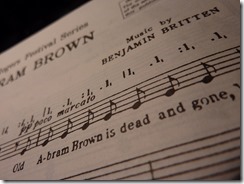
But don’t overlook the simplicity of unison singing and drones. These are great ways of finding out if your singing is as good as you think!
Singing in harmony is quite forgiving. It’s possible to sound reasonably good without being 100% accurate. But when all the singers have to sing exactly the same thing in exactly the same way at exactly the same time, it can reveal how accurate you really are.
This is true whether it’s you and a friend, you and a recording of your own voice, or you as part of a choir.
It’s surprisingly hard for a group of singers to sing well in unison. Singing in unison really highlights blend, pronunciation, rhythm, breathing points, pitching, etc. It’s a great exercise for any choir or singing group.
Singing in unison is also great for improving listening skills, and we all know that singing is all about listening. It’s also a good tool for arrangers: switch between unison and harmony to add variety. Use harmony sparingly and it will really jump out and impress an audience when it arrives.
Once you have nailed singing in unison, you can begin to add harmony.
Start off with a simple drone as another useful training exercise. Once again it’s a great technique for improving pitching, breathing, listening, blend, etc. And it’s also a good tool in the arranger’s palette which can add another layer of interest without being over-bearing if the melody or lyrics are important.
Next time you rehearse, try keeping things simple for a change and see what it reveals about you as a singer!Chris Rowbury
Website: chrisrowbury.com
Facebook: Facebook.com/ChrisRowbury
Twitter: Twitter.com/ChrisRowbury
Monthly Music Roundup: Tinyletter.com/ChrisRowburyRead more ...
-
Planning ahead: leave space for the unexpected
Listed on August 24, 2015 by Chris Rowbury in Blogs!Many choir leaders will be using the long break to plan their next season. photo by webmink
But be careful not to over-plan or you won’t be able to respond to the unexpected.
The more organised you are, the more likely it is that you’re well-advanced in your planning for the next choir season. Some choir leaders are already thinking way ahead and have been looking for Christmas repertoire since the early summer.
It’s always good to plan ahead, but there is a danger that your plan becomes too elaborate and inflexible. Try not to micro-manage the whole rehearsal and allow space and time for the unforeseen.
It’s great to be able to respond in the moment to something that happens in rehearsal. The sign of a good choir leader is the ability to spin on a sixpence and change creative direction.
You might also come across amazing new songs that just demand to be squeezed into your programme.
Venues often need to be booked way in advance and publicity sometimes needs to go out way before the choir season begins. So when you’re choosing the title, theme and images for your next concert, try to build in some ambiguity and flexibility so you have some wriggle-room later.
The best rehearsals I’ve ever had were the ones which were planned in some detail beforehand, but which then went off at the most unexpected and delightful tangents.Chris Rowbury
Website: chrisrowbury.com
Facebook: Facebook.com/ChrisRowbury
Twitter: Twitter.com/ChrisRowbury
Monthly Music Roundup: Tinyletter.com/ChrisRowburyRead more ...
-
Get out of your singing rut and try something new – it will make you a better singer
Listed on August 17, 2015 by Chris Rowbury in Blogs!I’ve written before about how you can use the long choir break to get better at what you do. photo by troy
One way is to attend singing workshops lead by a variety of different leaders. It’s a great opportunity to try something new.
Not only can you try out a completely different genre of singing (maybe even something that you’re not sure you’ll like), but you can also experiment with a different part of your vocal range.
It’s easy to get stuck in a specific part or be seen in a particular way if you sing in a choir regularly (see Is how you label yourself as a singer holding you back?).
Being in novel situation (different leader, singing with strangers, unusual song genre, unexpected venue) offers you the chance to experiment and even to re-invent yourself. Who knows, you might discover something new!
Try a different voice part. If you always sing soprano, try being in the low altos for a change. If you always gravitate to the low part, try singing the high.
It’s always useful to exercise that part of your voice you don’t use that often. You need to keep the whole of your range in good shape.
You’ll be amazed when you come back to your normal part – your voice will be richer and feel freer.
Don’t believe me? Try it out!Chris Rowbury
Website: chrisrowbury.com
Facebook: Facebook.com/ChrisRowbury
Twitter: Twitter.com/ChrisRowbury
Monthly Music Roundup: Tinyletter.com/ChrisRowburyRead more ...
-
How men sing (Part 2) – amazing examples from across the globe #getmensinging
Listed on August 10, 2015 by Chris Rowbury in Blogs!A while back I shared some amazing examples from all over the world of men singing together.
I thought it was about time I shared some more!
Like the word ‘choir’, the concept of ‘men singing’ can bring up specific stereotypes – not all of them pleasing.
If there is not a relevant role model out there, it can easily put men off singing because they feel that they don’t fit the mould.
Rather than going into the whys and wherefores of why men don’t sing, I thought I’d just share some great examples of men singing together. Who knows, you may find an example that fits the bill. I hope they inspire you!
First up is the amazing Corsican group A Filetta with a live performance from the citadel in Calvi where they run a polyphonic song festival each September. A Filetta is an all-male singing group founded in 1978 that performs traditional music from Corsica. I just adore this Corsican singing. They have such fine control and really, really listen to each other.
Next, nearer to home, are Hayward and Parsons singing the traditional English song Life of a Man. Hayward and Parsons are singing pilgrims, walking and singing their way round Britain on a quest to renew British Pilgrimage.
Probably needing no introduction, here are Ladysmith Black Mambazo singing Homeless which they wrote with Paul Simon for his album Graceland. Ladysmith Black Mambazo is a male choral group from South Africa that sings in the vocal styles of isicathamiya and mbube.
Something a bit more exotic, an old song from Macedonia: Turi mayko bistra rakiya. It is sung by Chalgia Moisey Petrovich who play almost forgotten songs from Serbia, Bosnia & Hercegovina, Macedonia, and Montenegro. They revive almost forgotten customs and the spirit of old Serbian taverns.
And then there’s Rawhide! This time sung by an unknown male voice choir from the US.
Here is a Tongoan/ Samoan song with some neat actions that they make look so easy, even when wearing suits! It is sung by the Dilworth Fortissimo Choir, an auditioned choir from the Dilworth boys’ school in Auckland, New Zealand.
Something traditional and more familiar: Gregorian chant. These are monks singing in a Catholic Benedictine Seminary. Gregorian chant is Western plainchant dating back to the 9th and 10th Centuries in Europe.
Next up is the Kecak from Bali. This is an excerpt from an amazing film called Baraka, a nonverbal film containing images of 24 countries from 6 continents. The Kecak is a form of Balinese dance and music drama that is also known as the Ramayana Monkey Chant.
Here are some Arab men, not only singing but dancing at the same time! These are Bahraini men showing their talent in the singing and dancing traditional songs.
And finally, for your delight and delectation, three men singing in a van.
Chris Rowbury
Website: chrisrowbury.com
Facebook: Facebook.com/ChrisRowbury
Twitter: Twitter.com/ChrisRowbury
Monthly Music Roundup: Tinyletter.com/ChrisRowburyRead more ...
-
Choir leaders: who’ll replace you when you’re gone?
Listed on August 3, 2015 by Chris Rowbury in Blogs!Nothing lasts forever. There will come a time when you will leave your choir and need someone else to take over.
Who will you hand over to and how easy is it to do? Let’s look at some options.
At some point you will need to hand your choir over to someone else. Maybe you’ll want to focus your energies on something different, or you’ll be too old or ill, or you’ll move away from the area. Whatever the reason, you’ll need to find somebody suitable to hand over to.what to look for in your replacement
In my choir leading career so far I have handed over two choirs to new leaders (and also inherited two choirs from others).
The first was a choir that I had created myself from scratch, WorldSong. As it was my first ever choir it meant a lot to me and it was important that it continued so I needed to make sure it was left in a safe pair of hands. So long before I was due to leave, I began to look around for a suitable successor.
I needed someone who:- was free on a Wednesday evening – if the rehearsal day changed we’d lose a lot of singers
- lived not too far away – so wouldn’t have to travel far
- enjoyed the same kind of repertoire – basically world music in our case
- approached choir leading and song teaching in a similar way to me – the Natural Voice approach
- was committed to the long haul – I didn’t want someone who was going to leave in a few months
- respected the ‘flavour’ of the choir – it’s culture and way of doing things
- was suitably experienced – taking over an existing choir is not good for beginners!
- would take on the administrative responsibilities – there is a lot of admin and I had done it myself up to that point
But I couldn’t find anyone!
In the end I was extremely lucky that a highly experienced choir leader moved just down the road from our rehearsal space and was looking for a choir to take over. Phew!
The person who ended up taking over didn’t tick all the boxes, but we made allowances. For example, admin is not her strength so we set up a committee to support her.
But what if I hadn’t been so lucky? What are the other options?
The two main ones (that I have experienced) are:- advertise far and wide
- train an existing choir member
finding a suitable candidate
You will know the best places to advertise for a new choir leader who will be suitable. It may involve some expense, e.g. taking out ads in trade magazines, but much can be done through word of mouth and social media.
If you’ve not been lucky enough to find someone local who you know, this implies that you are going to have to ask someone to relocate or to commute a considerable distance. Neither are stumbling blocks, but it’s not an idea situation.
Imagine you’ve been lucky to find several potential candidates, how do you decide between them? It’s up to the choir in the end. A choir is nothing without its singers and they are the ones who are going to have to work with the new person. If they don’t get on or don’t like their approach, then it’s not going to work.
Have an initial meeting or interview to make sure you’re on the same page, then get them to run a choir session. Give them free reign to show off their strengths. It’s probably best if you don’t stand on the side-lines and watch, but take part if you want to observe. Remember, it’s not you they’ll be working with.
Afterwards get feedback from the choir and discuss it with others (maybe you have other choir leaders you know locally or a choir committee).training up a choir member
I’ve been lucky in the past that I’ve had an experienced choir member who has done some teaching (in another sphere) and who has expressed an interest in leading a choir. They’ve learnt a lot by being a long-term choir member and by attending other singing workshops regularly (so have seen a range of different teaching styles).
If you have someone in your own choir you might think they have the skills required already or you can spend some time training them yourself or maybe send them off on a course if you think it’s necessary.
Let them have a few trial sessions with your choir to see how they get on. Sometimes things can be a bit sticky with particular singers when someone is ‘promoted’ in this way. They might find it hard to take instruction from someone who used to be one of them.choosing the right person and setting the ground rules
Be clear on who makes the final decision. Do you have a committee? Sponsors? Does the arts centre ‘own’ your choir? Make sure the decision is accepted by everybody involved – especially the singers.
It may be that you’ll need to write some kind of contract, even if it’s not a formal, legally binding document. It’s good to have in writing what the agreement is. For example you may decide on a probationary period, or you may insist that the old repertoire is kept alive, or there may be some concerts coming up and you need to honour them.
Some people handing over choirs can be quite possessive and insist that none of their arrangements can be used and the name of the choir must be changed.
Whatever the situation, make sure any conditions are made very clear as it will help the new person ease into the job.handing over
You as the (old) choir leader want to make the hand-over as smooth as possible, but then you want to get out of the way and let the new person get on with it. The hand-over will probably involve physically handing over sheet music, recordings, arrangements, etc. You might want to write up a simple document on the way that you’ve run the choir in the past. This will be something they can use as a basis until they’ve got around to doing it their own way. It’s a good idea not to change too quickly!
Different people will need different kinds of support. Make sure the communication channels are open between you so if they need your help it’s easy to get hold of you. You don’t want to be hovering over them offering advice all the time, but you also don’t want to just run away.settling in
It’s obvious that the new leader will not be you. But your singers will want them to be!
It’s quite a pressure for any new leader to be at least as good as the old leader and be able to put up with “Chris didn’t do it like this” or “We always used to do X when Chris lead the choir”.
It will take some time for both the singers and the new choir leader to get used to each other’s ways. Advice to new leaders: try to keep things the same as much as you can when you start and make changes slowly. Advice to singers: give the new leader a chance, you may be surprised by the new things they bring to the choir.
Having a new leader can be really good for a choir. It’s so easy to settle into habits and particular ways of doing things. Over time it gets harder for a choir leader to introduce new ways, but singers are more open to innovation if it comes from someone new. A new leader may also have a different skillset and be able to take the choir further than before, adding to what was already there.your final legacy
None of us like talking about it much, but we’re all going to die one day. You may be lucky enough to die on the job, in which case finding a successor won’t be your responsibility!
Whether you’re still leading your choir or not when you shuffle off this mortal coil, you will almost certainly have a rich legacy that will be useful to others.
I have a room full of sheet music, songbooks, CDs, instruments, books, etc. as well as MP3s, song lyrics, background information, links to videos, music notation, etc. on my computer.
I would love all this to go to a good home where someone will make good use of it.
I’ve put a section in my will that will ensure that all my music and singing stuff goes to a proper home. Maybe you should give that some thought too?Chris Rowbury
Website: chrisrowbury.com
Facebook: Facebook.com/ChrisRowbury
Twitter: Twitter.com/ChrisRowbury
Monthly Music Roundup: Tinyletter.com/ChrisRowburyRead more ...
-
Making the most of your singing voice – it’s not what you’ve got, it’s what you do with it
Listed on July 27, 2015 by Chris Rowbury in Blogs!We are not all born equal. Some have longer legs which helps them to win at hurdles or the high jump. Some have longer fingers which helps them to play jazz chords on the piano. photo by muzina_shanghai
But what you are born with need not limit what you do. It’s not what you’ve got, it’s what you do with it that counts.are singers born or made?
Many people believe that singers are born and not made. I often hear the refrain “Oh, I can’t sing – I’ve been tone deaf all my life.” And when it comes to rhythm and movement: “It’s no good, I was born with two left feet” (see Putting the hours in – are singers born or made?).
Some of this is due to upbringing. You seldom hear these protests in cultures where people sing and dance all the time. If you want your kids to grow up as singers and dancers, simply expose them to plenty of song and dance as they grow up.
In our culture there is a belief that only certain people are capable of singing to a high standard. Rather like Olympic runners, surely professional singers must have greater lung capacity or particularly flexible vocal cords?
Nope – not true.lung capacity in professional singers
There was an investigation into how the lung capacity of professional opera singers compared to the rest of the population. It turns out that there isn’t much difference!
The professionals did tend to have stronger chest-wall muscles and their hearts pumped better. They also maintained their lung capacity better as they got older, but that is only to be expected if someone sings regularly. They were not born with greater lung capacity.
We all have the potential to support our voice well and sustain our breath through long sustained notes, we just need a bit of practice.
It’s not what you’ve got, it’s what you do with it that counts.a professional loses her singing voice
There was a recent TV documentary about Connie Fisher, the Sound of Music star, who lost her singing voice. In 2011 she discovered that she had congenital sulcus vocalis. The condition, which means the singer has holes in her vocal cords, forced her to pull out of her dream West End role of Maria in The Sound of Music.
She had a series of operations, but none of them was able to give her her full singing voice back. Her surgeon said that it was amazing she had managed to have such a successful singing career given the vocal cords she was born with. He likened it to an Olympic athlete who has a defective or reduced thigh muscle, yet keeps on winning.
She then worked with so-called ‘voice builder’ Gary Catona, the man credited with saving the voice of Whitney Houston. Despite what the surgeons said, he was able to coax her voice back into life so she could perform again. Although she’ll never sing professionally as she once did (she has discovered further problems with her vocal cords), it is clear that with time and effort it is possible to overcome congenital defects in the vocal mechanism.
It’s not what you’ve got, it’s what you do with it that counts.doesn’t matter how you are made – just do it
So next time you think you can’t sing that well because of the equipment you were born with, just think of Connie Fisher, Django Rheinhardt, Christy Brown, Sargy Mann and numerous others who just got on with it.Chris Rowbury
Website: chrisrowbury.com
Facebook: Facebook.com/ChrisRowbury
Twitter: Twitter.com/ChrisRowbury
Monthly Music Roundup: Tinyletter.com/ChrisRowburyRead more ...
-
What is your measure of success? – choir leading and self-reflection
Listed on July 20, 2015 by Chris Rowbury in Blogs!How do you know if a choir session or singing workshop or performance has been a success? photo by shadowkilla_tk
And if it has gone badly, how does that feed back into your teaching and choir directing?
We all have an intuitive feeling for when something has gone really well (or really badly). But what we feel might not be the whole story.
You might ...- run what you think was a cracking singing workshop, only to get feedback that it was too hard or unclear for the singers.
- have what you think was a storming performance with your choir, but the audience didn’t respond much and the talk in the bar was that it wasn’t up to your normal standards.
- lead what you think was an amazing rehearsal, only to hear afterwards that your singers would have preferred to sing more and done less detailed work.
Of course, you can’t please everyone (see Keeping a choir happy – you can’t please everyone), but it’s important to have a more objective idea of when something has been a success (or failure). It’s only then that you can reflect on your teaching and conducting in order to improve.
How can you develop an objective measure of success or failure?aims and objectives
Start with some clear aims and objectives that you want to achieve.
It might be to teach five songs in a workshop or run the first half of a concert in your rehearsal or improve your choir’s intonation or to increase the dynamic variety in your next performance.
It might be that your aims and objectives are formulated by negotiation with the singers. Ask them what they want to get out of the session or create your next workshop to address specific needs identified by your singers or chat with audience members to find out what they’d like in their ideal concert.
If you don’t have any clear and specific aims and objectives then it’s impossible to decide whether you’ve succeeded or not.
They don’t have to be extreme or high falutin’ – when you’re starting out your aim might be just to get to the end of a rehearsal in one piece!feedback – yours and theirs
After the workshop or rehearsal or concert you need to decide whether your aims and objectives have been met. You need to get some feedback both from yourself and from those on the receiving end.
Feedback from yourself is basically self-reflection. Take a quiet moment to think back over the event and try to look objectively at whether you realised your aims and objectives. The clearer they were stated in the beginning, the easier it will be for you to decide. For example, if one aim was to get through five songs but you only got through four, then you clearly didn’t realise your aims and objectives.
Feedback from others is a little more tricky. It’s very easy to ask leading questions in order to get the answers that you want. Feedback from others can range from informal chats to more formal feedback forms. Check out these posts for more information:
Why feedback is important when teaching and learning songs
How audiences behave and how we respond
What kind of feedback do you want?
Using feedback forms for choirs and singing workshopslearning to be a better choir and workshop leader
Once you’ve decided whether your performance or rehearsal or workshop was a success or not, you are in a position to reflect more on what you did and how you might improve in the future.
If something doesn’t succeed it’s quite easy to examine what you did to discover why. Having done that, it’s relatively simple to make changes to try and ensure it doesn’t happen again.
But you can also learn when something is successful. The success might have been greater than you expected or maybe you’d tried something for the first time. In any case, think about those things you did that helped you realise your aims and objectives. Can they be improved or developed? Can they be used in different contexts? Can they be combined with other things to make them work even better?their success might be your failure
If you’ve been commissioned by someone else to run a specific workshop or to conduct a particular performance, you might end up achieving the aims and objectives set out for you, but end up feeling that you’ve ‘failed’ in some way.
I had such an event earlier this year (see What if the singing session is a success, but you feel like a failure?). I delivered exactly what was asked of me and the participants enjoyed themselves, but it really didn’t float my boat. I didn’t get much out of the experience and felt rather flat at the end.
If this happens often then you need to be careful when selecting work from others to make sure that your notion of ‘success’ matches theirs.exceeding expectations
They say that the true measure of a successful business is when your customers’ expectations are exceeded.
Just because you’ve succeeded this time doesn’t mean you can’t succeed even more the next time!Chris Rowbury
Website: chrisrowbury.com
Facebook: Facebook.com/ChrisRowbury
Twitter: Twitter.com/ChrisRowbury
Monthly Music Roundup: Tinyletter.com/ChrisRowburyRead more ...
-
How men sing (part 1) – amazing examples from across the globe #getmensinging
Listed on July 13, 2015 by Chris Rowbury in Blogs!Many choirs have a shortage of male singers. Most of my singing workshops attract just 10% men. Is it just a problem here in the UK? photo by Matthias Zepper
In an attempt to get more men singing, I’m going to share some amazing examples of men singing together from all over the world.
Why don’t more men sing? Who knows??!! I’ve written at length about this before (see Men and singing).
Like the word ‘choir’, the concept of ‘men singing’ often brings up particular stereotypes:- male voice choirs full of old men in bow ties;
- professional operatic tenors with unbelievably high voices;
- young teenagers with strange haircuts and boy band ‘dancing’;
- wobbly-voiced men singing in the pub after a few pints;
- shouting in tune at football and rugby matches;
- very precise, very neat, very choreographed choruses singing barbershop or musical theatre;
- lead singers in death metal bands screaming until their throats bleed.
All these sorts of male singing exist and it’s great to have such variety, but they certainly don’t fit every man’s idea of men singing.
If there is not a relevant role model out there, it can easily put men off from singing because they feel that they don’t fit the mould.
So rather than going into the whys and wherefores of why men don’t sing, I thought I’d just share some great examples of men singing together. Who knows, you may find an example that fits the bill. I hope they inspire you!
First up is a performance featuring the famous Georgian folk singer Hamlet Gonashvili. Look past the 70s clothes and moustaches and bad quality Georgian TV recording and just bathe in the beautiful voices and harmonies.
The Malawi Mouse Boys is an eight-member band discovered in 2012 by an American record producer. They spend their days beside a dusty road scratching a living by selling an unusual roadside snack to passing motorists: barbecued mice on sticks. But when no cars are in sight and the trade in mice kebabs is slow, this group of childhood friends bring out their rudimentary guitars and put on an impromptu performance.
And now for something completely different ... Sardinian shepherds singing. It’s clear that their singing style has been influenced by hanging around with sheep for too long!
We can’t have examples of men singing without some Welsh men. Plygain singing is a Welsh Christmas tradition.
Here’s some traditional Cornish singing from the sea shanty group Bone Idol from the Scilly Isles.
Hindu men letting rip for the Holi festival. Looks like they’re having fun!
I just love that old style gospel singing. Here are two examples. First up, the Blind Boys of Alabama who have been singing together since 1944.
Now it’s the turn of the younger generation. Here’s the Washed Up Beulah Band.
If you want something with a little more punch, here’s a Maori haka from New Zealand.
And to finish off this edition (I’ll be posting more at a later date in Part 2), here are some Orthodox Jewish men singing Pink Floyd!Chris Rowbury
Website: chrisrowbury.com
Facebook: Facebook.com/ChrisRowbury
Twitter: Twitter.com/ChrisRowbury
Monthly Music Roundup: Tinyletter.com/ChrisRowburyRead more ...
-
The curse of confusion: why thinking is bad for singing
Listed on July 6, 2015 by Chris Rowbury in Blogs!I teach a song by ear in less than an hour at a workshop. Everyone picks it up really quickly and then they sing it brilliantly.
We’ve been working on the same song with my very accomplished weekly choir for quite some time. They really struggle and it’s like plodding through mud. What’s going on here? It’s all about your head getting in the way.no time to worry
Twice a year I create a choir from scratch in just six two-hour rehearsals (see Instant choir – just add people). There are no auditions and everyone is welcome. We tackle eight or more songs, all taught by ear and all in four-part harmony.
The project goes at breakneck speed: people lap up the songs, nail their parts, learn the (often foreign) words, have fun and then perform to a high standard.
When it’s all over the singers often realise that some of the songs were quite hard and they’ve learnt a huge amount in a really short time.
There has been no time or space for people to think: what’s the next word? do I really know verse two? does it go up at the end of the line or down?doubt creeps in week by week
I teach a song to my weekly choir and they pick it up really quickly. We sing it through at the end of the rehearsal and it sounds fantastic. Maybe a few tweaks are needed here and there, but we’ll go over it the following week and it should be fine.
The next week comes. We go over the song and it’s awful. Nobody seems to remember their part. Sections stumble and come to a halt. Frowns appear and singers look at each other questioningly. Confusion reigns.
The fact that we have plenty of time to work on a song means that there is ample scope for people to think: how many times do we repeat the second section? do the altos come in at the start or only the second verse? what if my voice cracks when I go for that high note?the virus of doubt
I’m used to seeing frowns on singers’ faces (see Why the singers in your choir still love you even though they look bored), but when people start to shoot desperate glances at each other and some singers just stop singing, I know there is something wrong.
Often a whole section can become infected with the virus of doubt. A miasma of confusion hangs over their heads like a thick cloud. Once doubt has infected a part it’s very hard to instil confidence again.
When there is time to think, there is space created for doubt. None of us is ever 100% sure of what we’re doing, but given time, doubts build upon doubts and things just get worse.
You might be a bit hesitant about your part. You sing quietly and hesitantly then suddenly realise the singer next to you is singing something slightly different. You glance at them quickly in confusion.
You’re doing quite well, but suddenly the singer next to you glances at you looking very confused. Maybe you’ve done something wrong? Maybe you’re singing your part incorrectly and so you begin to wonder that you don’t know it as well as you thought. You start to sing quietly and hesitantly, very aware of the singer next to you.
You notice that all the singers around you are singing more quietly and rather hesitantly. Maybe you missed the conductor’s instruction or maybe nobody in your section really knows their part. You don’t want to be the odd one out, so you too start to sing more quietly and begin to doubt whether you actually know what you’re doing.
Slowly a whole section can grind to a halt and begin to doubt that they ever knew the song in the first place. Peer pressure and time for thought has allowed the virus of doubt to spread.behave as if you know what you’re doing
What can you do about this? Is it possible to avoid falling into the doubt trap?
Yes.
It’s not enough just to tell people to stop thinking too much, but it is possible to encourage people to have more trust (see also Four powerful ideas guaranteed to help you learn to sing better).
Trust that they know more than they think; trust that they’re perfectly capable of singing the song; trust that making a mistake doesn’t mean the end of the world; trust in your fellow singers; trust that your choir leader will help (see also Trust me – you know it makes sense).
Given that trust, you then simply have to behave as if you know what you’re doing (because 99.9% of the time you do) and everything will be fine (see also Two big ideas to create the perfect choir or singing experience).
Don’t think, just sing!Chris Rowbury
Website: chrisrowbury.com
Facebook: Facebook.com/ChrisRowbury
Twitter: Twitter.com/ChrisRowbury
Monthly Music Roundup: Tinyletter.com/ChrisRowburyRead more ...
-
Chris Rowbury’s monthly music roundup
Listed on June 30, 2015 by Chris Rowbury in Blogs!I thought you might be interested in a new venture of mine.
I’m about to publish a free, monthly roundup of music news delivered straight to your inbox.
As those of you who follow my Facebook Page know, I regularly post interesting videos, articles, photos and jokes about all things musical, choral, vocal and singing-related (no cat videos!).
But the famous Facebook algorithm means that most people who ‘like’ my page get to see very little of what I post.
So I've decided to make it more widely available by publishing a monthly roundup that you can subscribe to by email.
The first issue will be out on 1st July 2015 and every month thereafter. Who knows, if people like it I may even go to a weekly publication.
If you want to try it out, then you just sign up here: tinyletter.com/chrisrowbury I only need an email address. Simple!
You can, of course, unsubscribe at any time.
[This is not to be confused with my singing workshop mailing list. If you sign up for that you will get two newsletters a year to let you know what I’ve been up to and what singing workshops I’ve got coming up. You can see the latest summer edition here: Summer singing news and if you like what you see you can sign up to my mailing list.]Chris Rowbury
Website: chrisrowbury.com
Facebook: Facebook.com/ChrisRowbury
Twitter: Twitter.com/ChrisRowbury
Monthly Music Roundup: Tinyletter.com/ChrisRowburyRead more ...
-
How to pace a long singing workshop effectively
Listed on June 29, 2015 by Chris Rowbury in Blogs!If a singing workshop is just a couple of hours long, then singers’ energy and concentration will probably be fine.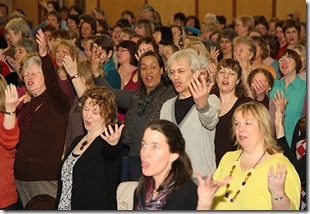
But for workshops which last a whole day, energy, concentration, focus, boredom, etc. all become factors. What’s the most effective way to pace a long singing workshop?grab ’em while they’re fresh
Energy and enthusiasm (and trepidation!) are at their peak when a workshop starts. Take advantage of this to put the group through their paces (lots of pitching and harmonising exercises and fun singing games) and maximise teaching time while energy levels are up. Start with an easy song, but then try to tackle harder material while everyone is fresh.you need breaks, but ...
You’ll need to break up the workshop to give people time to rest, go to the toilet and grab a drink. But you need to plan carefully. If, for example, you have 40 singers and each one takes a minute to get a cup of tea, that’s 40 minutes gone before you realise it. And if you say a break is going to be 10 minutes long, you can be sure that it will become 15 or even 20 minutes. So factor this in.
On a one-day singing workshop I never have a formal tea break in the morning, just a 10 minute “wee and water” break. We then have a longer, more formal tea break in the afternoon when people are flagging.have seats, but don’t use them all the time
It’s best if people stand when singing. But people will get tired when they’ve been on their feet for a long time. Make it clear that people can sit down whenever they need to, but every now and then get everyone up to sing through an entire song. Variety keeps energy up.
Make sure you teach the harmonies to each song in small chunks so no one section is waiting around too long. If you DO have a tricky part to teach, make it clear that other sections can sit down while they wait.how to deal with the post-lunch slump
After lunch, singers will have forgotten everything they’ve learnt so far! They will have no recollection of the songs they learnt in the morning, their brains will have turned to mush and they will have very little capacity to learn anything new.
I try to limit all the teaching to the morning session. If I do teach anything after lunch, I make sure it’s not too hard. I start the afternoon session with some energising or “brain gym” exercises. I then go at a much slower pace and don’t get impatient when I have to go over and over things. Singers will need a lot of reminding, so make sure you leave plenty of time.leave time for revision (and singing)
At the end of a long workshop it’s important to revise everything. People have come to sing, not to learn all the time, so make sure you leave plenty of time to sing through all the songs you’ve taught. Participants will want to feel a sense of accomplishment, that they’re really nailed a song and that it’s bedded in.
Recent research has shown that revising something just at the point of forgetting helps to establish it in long term memory. Revising all the songs at the end has this effect. People will just be on the verge of forgetting what they learnt at the start of the day, so it’s a great time to run through it again so it will stay with themwhat’s your experience?
How do you find the pace of one-day singing workshops? If you’re a workshop leader, do you have any other useful suggestions for pacing the day? And if you attend workshops, how do you find the longer ones? I’d love to hear from you. Do drop by and leave a comment.Chris Rowbury
Website: chrisrowbury.com
Facebook: Facebook.com/ChrisRowbury
Twitter: Twitter.com/ChrisRowbury
Read more ...
-
Have you got what it takes to be a singer?
Listed on June 22, 2015 by Chris Rowbury in Blogs!There’s a lot of nonsense out there about what it takes to be a singer.
The fact is, you already are one! Let’s unpick some of the myths and misconceptions.what does it take to be a singer?
I believe that everyone can sing.
“Hold on a minute! What about my Uncle Bob? He can’t hold a tune to save his life!”
This is my response to that: “Everyone can sing” – What the hell does that mean??!!
A lot of people will say that you don’t have what it takes to be a singer if you haven’t got natural talent or you don’t have a hit record or you haven’t had singing lessons or you don’t put the work in.
But for every comment like this there is always an example that contradicts it.
There are plenty of well-known successful singers who don’t have “nice voices”. There are thousands upon thousands of the most beautiful singers out there who you will never hear of because they aren’t famous. For every great singer who has taken loads of singing lessons and put the long hours in, there are those who just came into the world with an amazing voice and didn’t have to work at it.
Most people who worry about being a ‘good’ singer or need to know if they have what it takes are out to be famous. They want to be a big success and become a celebrity with millions of record sales.
But that has nothing to do with singing. That’s about being famous which is a whole other story. It’s about people who need the validation of the world to feel good about themselves.you’ve already got what it takes
If you’re worried that you don’t have what it takes to be a singer, you might want to check out these articles.
Is how you label yourself as a singer holding you back? – you might have put yourself in the wrong box or have an out-of-date view of yourself. Time to change that!
Want to sing but are scared of being judged? Here’s what to do – everyone can sing and you have an amazing, unique voice, but may be nervous about sharing it. Here are some hints to get you started.
If not now, when? – start singing NOW! – this is for you if you’ve always put off singing until tomorrow, or until that day when you feel ‘ready’
Never let the fake perfection of pop singers put you off singing – many of you compare yourselves with your favourite pop singer and find yourself lacking. But most modern pop songs have Autotune and many other tricks to make the singers sound better than they really are.
How do you get to the truth of what your singing ability really is? – here are some ways of finding out what you really sound like as opposed to what you think you sound like.
What makes a ‘good’ singer? – it’s all about context – ‘good’ depends on whether you’re going to make a recording to sell or if you just want to sing to your friends.
Never tell someone they can’t sing – it is brutal, damaging and untrue – you may well have been put off singing by someone’s casual remark on your singing ability. So be careful what you say to others – it can hurt and last a lifetime.
One unkind word can put you off singing for ever – how to protect yourself – and if someone has made nasty comments about your singing, here are some ways get over it.
Be the best singer you can, but don’t forget there’s more to life – we all want to be great singers, but don’t get fixated on the fame thing, find a balance to your life.
What to do if you don’t have a ‘nice’ voice – it’s not up to you to decide whether your voice is ‘nice’ or not, and remember one person’s ‘nice’ is another’s ‘terrible’!
Singing the wrong note is not the end of the world – we can be very hard on ourselves and maybe even want to give up if we’re less than perfect, but it’s inevitable that we’ll make mistakes as we develop.
The only thing stopping you from being a better singer is ... you! Get your head out of the way and let your singing voice do its job.
Your singing voice: if it ain’t broke, don’t fix it! – if everything’s going well, you like the sound of your voice and it never becomes hoarse, then you don’t need singing lessons. Just sing!
Can I call myself a ‘singer’? – all those preconceptions about what it takes to be a ‘real’ singer just get in the way of us singing and thinking of ourselves as singers.
Putting the hours in – are singers born or made? – you may have heard that to be an expert at something you need to put in 10,000 hours of practice. But maybe you’ve either got it or you ain’t. What do you think?
How to be a confident singer – easy: stop caring what other people think about you!
Learning to love the sound of your own voice – weird isn’t it that most of us hate how we sound when we listen to a recording of our own voice? You can get over this though.
Why can’t I sing? – a list of many of the (false) reasons why people think they can’t sing and some useful counter-examples.
How do I know if I’m singing in tune? – and when you’ve figured that out, you can go on to Learn how to sing in tuneChris Rowbury
Website: chrisrowbury.com
Facebook: Facebook.com/ChrisRowbury
Twitter: Twitter.com/ChrisRowbury
Read more ...


