
Events Search and Views Navigation
June 2013
The Changing Faces of China
Join Malcolm Tranter and friends exploring the 'tourist trail' to see Shanghai, cruise the Yangtze River via the controversial Three Gorges Dam, and visit the Terrecotta Army, the Great Wall, Tiananmen Square, the Forbidden City and much more.
Find out more »A Medieval Odyssey: From Sutton Hoo To The Wilton Diptych
With reference to such works of art and others like the Bayeux Tapestry and the illuminated manuscripts, we will highlight the major staging posts on a cultural journey through medieval England.
Find out more »August 2013
Dillington Summer School : Week One
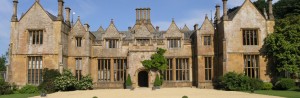
Out-and-about or Dillington based, create a learning holiday with a difference on one of our week long Summer Schools and learn with like-minded people whilst having fun, relaxing and rejuvenating. There are three weeks to choose from.
Find out more »October 2013
Ham Hill, Hillforts & the Iron Age of the South West
This weekend will present the results of the recently completed excavations at Ham Hill. It will provide a comprehensive picture of the work that has been done over the last three years including discussion of the geophysical survey, the excavations, the finds and the agricultural economy.
Find out more »Deserted Villages in the Cotswolds
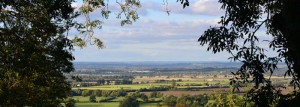
By the 13th Century, the Cotswold landscape was dotted with a network of villages. However, with the Black Death of 1348/9, many communities were weakened and communities were broken up. We will examine the causes of desertion and the character of the deserted Cotswold village.
Find out more »November 2013
Romans in Britain
Experts are divided about the lifestyle Rome imposed on the Britons but this weekend we take a visual and stimulating tour of Roman sites far and wide to learn more about everyday life - for us and the Romans who lived, worked and played here - learning more about the enduring consequences that changed this place forever.
Find out more »December 2013
The Gods of the Greeks
We’ve all heard about Zeus and his thunderbolts; we know about Cupid and his arrows, but what about the rest of the Greek gods? What was believed about them; what do their stories tell us about them? Their names are still with us – we talk about Olympian tasks – but who lived on Olympus and what were they doing? Join us for a weekend while we look to the myths and beliefs about some of the Greek deities.
Find out more »January 2014
The Royal Opera House, Covent Garden
Explore the history of the different theatres and how the buildings were used and developed over the centuries.
Find out more »February 2014
The Tudor & Stuart Dynasties
This course focuses on the personalities and achievements of the different monarchs, and seeks to answer the question of why the Tudors were one of the most successful royal families of the early modern age
Find out more »August 2014
The Dillington Summer School
Out-and-about or Dillington based, create a learning holiday with a difference.
Find out more »Russian Revolutions: the History from Tsars to Communism
Over this weekend you will explore how and why the Russia of 1855 transformed from a monarchical autocracy with hereditary autocratic tsars, to the communist superpower of post the Second World War.
Find out more »October 2014
Unravelling the Irish ‘Troubles’
This weekend history course unearths just what a muddle various politicians and religious leaders have created in their wish to reconcile the diverse views, often held passionately, as to whether Ulster should remain within the United Kingdom or be unified with the south
Find out more »March 2015
Alice’s Adventures in Wonderland: re-reading a classic at 150
Alice's Adventures in Wonderland celebrates its 150th anniversary in 2015. Carroll's text famously ushers in a 'golden age' of children's literature, in which fantasy and imagination begin to receive as much attention as pedagogy in books for children. This course will explore the origins, development and transformation of the text across the last 150 years, and consider why Wonderland still matters as much in 2015 as it did in 1865.
Find out more »Myths and rituals in religion
Myths and rituals create, sustain and disrupt religious and cultural systems. This course examines how religious myths and rituals evolve and affect religious and secular life. Looking at different approaches we will consider a variety of myths and rituals from different religions and cultures, including pilgrimage, food, texts and rites of passage.
Find out more »Music and medicine in the 19th century
This course explores the physicality and psychology of musical depictions of sickness, health, doctors and medicine on the operatic stage. It examines notions of the body – in particular, those associated with 'female' illness, including consumption, hysteria and madness – and of the virtuoso musician as superhuman, hypnotist, or magician.
Find out more »October 2015
The Lindisfarne Gospels: Celtic and Anglo-Saxon art in action with Professor Michelle Brown
This course will focus on one of the world’s most beautiful books, the Lindisfarne Gospels, made in the Anglo-Saxon kingdom of Northumbria in the early 8th century
Find out more »February 2016
Relative strangers? The family and households in modern British society
This course will explore sociological approaches to the household and family life in Britain since 1945. Topics covered will include definitions of the family, changing family types and the causes of change in household relationships. The link between the family, identity formation and cultural reproduction will also be examined. We will then evaluate how sociologists have studied family life and the theoretical models they have developed to explain the purpose of the family in modern Britain. The course will finish…
Find out more »Socrates, Plato and Aristotle
Socrates, Plato and Aristotle are the greatest of ancient Greek philosophers. This series of seminars is an introduction to some of the key elements in their thought.
Find out more »An introduction to the Roman Empire (online)
No single culture has affected the development of the modern world as deeply as the Romans. In law, architecture and language the heritage of Rome is so strong in Europe today that some academics claim that the Roman Empire has never really gone away. This course will examine the four centuries in which the Roman Empire ruled the west and ask why it left such an enduring legacy. It will argue that the main success of the Roman Empire was…
Find out more »Cambridge wives: influential women in Victorian Cambridge
Cambridge society changed dramatically after 1882 when College Fellows were allowed to be married. The group of wives formed a new society and became pioneers in their own right in education, mental health care and the suffrage movement. Their achievements show how the Victorian idea of a wife as an 'angel in the house' was very different from the reality.
Find out more »Ancient cultures of South America
The Inka Empire (AD 1400-1532) ruled 10 million subjects across five countries without written language or the wheel. But how did they do it? If you want to learn about the cultural richness of the ancient world of Peru, then this course is for you. We will discuss pre-Columbian kingdoms, warfare, sacrifice and ritual, death and mummification, skilled artisans and craftsmanship, and the ability to survive in places of extreme environmental conditions.
Find out more »Ritualism and revivalism: a brief history of Victorian religion
Christianity played an important part in Victorian politics, sociality and culture. It was an era of significant development of religious thought; of faith and doubt. This course is a survey of Victorian religion which includes studies on the feature of British Evangelicalism, the battles between Anglican and Nonconformists, Tractarianism, and other developments such as premillenialism and revivalism.
Find out more »Defending Scotland
For most of its history, Scotland has been an independent state and may well be one again soon. This course traces how its peoples defended themselves down the ages through looking at Scottish fortifications: their structures and their historical context. The course is fully illustrated.
Find out more »Made in Britain: How Prehistory Shaped Our World
Before the coming of the Romans the people of these islands were non-literate, relying on word of mouth to pass on their skills and knowledge. Through an exploration of the archaeological inheritance they left behind this course reveals how their craftsmanship, ingenuity and endeavour shaped our world, laying the foundations for the Britain we inhabit today. This weekend includes an all-day field trip to Ham Hill Fort, Glastonbury Tribunal and Somerset Museum. All-comers welcome but please note the field trip…
Find out more »From King Lud to King’s Cross: The History & Life of London
Dr Johnson wrote: 'When a man is tired of London, he is tired of life;for there is in London all that life can afford'. In this course, we shall look at the life of London from its foundation to the present day: its trades, industries, docks and rivers; its theatres, music halls and other entertainments; the creation of the suburbs and the role of the railways. We will also hear the voices of London's inhabitants, past and present, through their…
Find out more »Daily life and the afterlife in ancient Egypt
Have you ever wondered what life was like in ancient Egypt? Or why the Egyptians mummified their dead? From childbirth to mortality, funerals to Osiris's judgement, in this course, you will explore daily life in ancient Egypt, and beyond. By the end, you will have a better understanding of the ancient Egyptians, and a foundation for any future study.
Find out more »Bede and the history of early England
Bede's Ecclesiastical History of the English People tells us much of what we know, or think we know, about the history of England from its origins to the 730s. This course will revisit Bede, in the light of recent historical and archaeological research, to estimate how far he has misled generations of readers.
Find out more »March 2016
William the Conqueror and His Sons
The Battle of Hastings and William's Norman settlement which followed it were one of the great watersheds in English history. It was a period of revolutionary change but also some striking continuity with the Anglo-Saxon society and culture it was replacing. The reigns of his sons William Rufus and Henry I were to build on William's legacy to create a powerful Anglo-Norman kingdom of England. Dispute over the succession of Henry's daughter Matilda as Queen of England was to plunge…
Find out more »Saqqara: Egypt’s Most Important Ancient Necropolis
In this weekend course we will enjoy an in-depth exploration of one of Egypt’s most significant ancient sites – Saqqara, the necropolis of Egypt’s ancient capital Memphis. We will examine the architecture, reliefs, inscriptions, statuary and funerary equipment of the extraordinary tombs of pharaohs, nobles and sacred animals, dating from the Early Dynastic Period through to the Ptolemaic Period. We will consider the mastaba tombs of some of Egypt’s earliest pharaohs and statesmen; the oldest large-scale stone monument in the…
Find out more »John’s gospel: where children can paddle and elephants can swim
John's gospel contains some of the most well-known phrases in the New Testament: 'the Word became flesh', 'I am the bread of life'. But there are also puzzles: why does John's Jesus die on a different day to the Jesus of the other gospels? Is the gospel anti-semitic? Is John's Jesus more divine than human? This course will explore these questions as well as delving into John's language and theology.
Find out more »News From the Fronts: Verdun and Allied Planning for 1916
As the Allied military chiefs assembled at Chantilly to discuss plans for co-ordinated offensives on Western and Eastern Fronts, the French position at Verdun had been rendered tenuous with the German capture of Fort Douaumont, keystone to the whole front. News from the mInor theatres was mixed but in Mesopotamia a British force was trapped in Kut. Against this backdrop the political leaders met in Paris to review plans for summer offensives on both major fronts.
Find out more »The Anglo-Saxon Fenland
The Anglo-Saxon fenland was colourfully described by the great Clifford Darby as 'a frontier region...the resort of brigands and bandits' in whose empty wilderness saints like Æthelthryth of Ely and Guthlac of Crowland established their new monastries. The course critically examines these assumptions in the light of recent research which suggests fenland history was more complicated and more interesting in this period.
Find out more »Viking Britain
For over 300 years, the Vikings were profoundly involved in British society and politics, and their legacy can still be felt throughout the British Isles. This course will introduce you to the history, archaeology, art and literature of the Vikings, and show how the idea of 'Viking Britain' continues to resonate to this day.
Find out more »The English economy before the Norman Conquest: agriculturalists, artisans and aristocrats
How did people make a living when there was no money in England, and how did goods circulate with no market? Come and explore fundamental questions like these on this weekend course, and trace how Anglo-Saxon towns, trade and coinage began and developed as the early Middle Ages progressed.
Find out more »West Country Railways
This course explores the archaeology and heritage of railways from Wiltshire to Cornwall. Brunel’s work is seen in the Box Tunnel, Dawlish railway, Royal Albert Bridge and spectacular viaducts. Abandoned lines are worth investigating, especially branches serving mineral and other industries. Case studies include the contrasting Liskeard and Caradon Railway, and the Somerset and Dorset Railway. Alongside, the region’s heritage includes a number of important preserved steam-worked railways. All-comers welcome.
Find out more »Peace, conflict and international society
The news seems dominated by war, violence and conflict, but these forces also lie at the heart of how and why the world operates as it does at the level of international politics. If you have ever wondered why peace is so elusive and conflict so prevalent, then this course will help you understand such questions.
Find out more »The Dartington Dream
In 1925 Leonard and Dorothy Elmhirst embarked on the adventure of their lives, by purchasing the run-down medieval estate of Dartington Hall in Devon and turning it, within their lifetimes, into a flourishing centre for the arts and education with an international reputation. Discover the history of their staggeringly ambitious efforts to revitalise the crumbling Estate with Maggie Giraud, who for almost twenty years was employed by the Dartington Hall Trust, firstly as a teacher of Art History, and most…
Find out more »Getting Beyond the Census – Bringing Your Family History Alive
This course will bring your family history to life. Where did they live? What did they do? Did they move? We will see how social history affected their lives, looking at the bigger picture. There will be a chance for you all to participate, share research and learning experiences with each other, get updated on what’s new on the internet and have fun with your research! Please note this course is not suitable for beginners.
Find out more »Hadrian’s Wall and Imperial Rome’s Frontiers
From Augustus’ creation of an organised empire in the first century B.C., the limits were established and (apart from one or two extensions!) remained largely unaltered through four centuries. We will look at the early frontiers, how different provinces adopted different solutions, and the gradual increase in scale and complexity as external threats came to bear on the empire. The course includes a visit to Ham Hill.
Find out more »April 2016
The Spanish Civil War
This year sees the 80th anniversary of the outbreak of the Spanish Civil War. The war was a major event in 20th-century Europe and attracted passionate interest across the world. This course introduces you to debates over the war's origins, its effects and the causes of Franco's victory as well as the passions roused in this conflict which divides Spain to this day.
Find out more »