
-
Should your choir perform live? – arguments for and against
Listed on March 30, 2015 by Chris Rowbury in Blogs!When I started my most recent community choir The OK Chorale back in 2011 I decided it wasn’t going to be a performing choir. Brighton Vox, photo from atticglimpse.blogspot.co.uk
But inevitably, over time, we have ended up giving local concerts. Not all choirs perform though. Let’s look at the pros and cons.reasons not to perform with your choir
- too much focus on product rather than process – most singers enjoy the process of singing and learning together rather than having to always be aware of how good the finished product will be.
- always rehearsing, no time for fun – it’s very hard to strike a balance in weekly sessions between rehearsing for your next concert and actually enjoying the singing. It can all too easily become like ‘work’.
- less opportunities to learn new repertoire – if you perform frequently (and I know of some choirs who do up to a dozen concerts a year), then there is often no time to work on new songs.
- can be stressful learning words, etc. – when the pressure’s on to get up to speed for a performance, many singers find it very stressful.
- hard to integrate new singers into old repertoire – if you’re building up to a concert which involves some of the choir’s well-known back catalogue it can be problematic when new singers join the choir and you have to get them up to speed separately.
- can put off new recruits – especially if you perform to a high standard. With my first choir, WorldSong, I used to think that we would recruit lots of new singers through our regular concerts. But because we sung to a high standard it actually put audience members off because they thought they wouldn’t be good enough to join!
- singers who can’t make concert can feel left out – not everyone is going to be able to attend your next concert and it can leave them feeling excluded as you rehearse each week.
- pressure to fill seats and raise bar each time – most people join a choir to sing, not to publicise, sell tickets and fill seats. There can also be a pressure to raise the bar each time and make each concert more spectacular than the last.
- promotes static performer/audience relationship – many cultures in the world don’t differentiate between performers and audience, rather everyone joins in all the time. There are no ‘special’ people who perform for others as in our culture. Putting on regular ticketed concerts simply re-emphasise this false distinction and can reinforce audience members’ beliefs that you have to be ‘special’ in order to be able to sing.
- hard to control environment – amplification, sight lines, etc. Often elements of a performance are out of your control and mistakes or bad/ wrong equipment can spoil an otherwise good performance.
- always chasing the next ‘high’ – if a concert goes well, the singers will feel amazing afterwards. But that feeling doesn’t last long and they will want another ‘high’ in a short while. It stops being about the pleasure of singing and more about chasing external validation.
reasons why it might be good for your choir to perform
- share your accomplishments with pride – as you work together as a team your singing will improve and you will end up sounding great. It’s lovely to be able to share that achievement and sense of pride with others.
- some people need something to work towards – not everyone is satisfied with just singing together each week but always need to be “working towards something”. It can be making your next CD, being part of a theatre show or putting on your next concert.
- can raise profile of choir locally – if you want to promote your choir, doing public performances and showing everyone what you do it a great way to do it.
- good recruitment tool – even though your high standards may put some people off (see above), hearing your choir perform is one of the best ways of recruiting new singers.
- shows friends and family what you’ve been up to – many friends, partners and family members have no idea what you get up to at choir each week and sometimes it’s hard to explain well. If they get to come and see you perform they will find out what it is you do.
- motivation to learn lyrics and polish songs – despite our best intentions, we often need some extra motivation to learn the lyrics to a song and really nail our part. A concert looming focuses the mind wonderfully!
- big challenge can lead to sense of achievement – many singers who have never performed before find being part of a concert a real challenge, but afterwards it brings a wonderful feeling of achievement.
- some people just like showing off! – it might not be your whole choir, but some people are just hard-wired to be performers and love showing off in front of an audience. It might be that you can do some smaller gigs (not involving the whole choir) during the year to satisfy their need.
other posts of interest
You might find these posts of interest too.
Choirs that don’t perform
What’s the point of live music performance?
7 ways to share your choir’s singing without making a big performance of it
Process vs. product: are you along for the singing ride or just the performance?
Balancing fun with rehearsing for concerts
Don’t peak too soon – effective rehearsal planning for your next concert
Getting the best out of your choir: preparing for performance
Why ‘singing for fun’ doesn’t mean low standards and poor performancesChris Rowbury
Website: chrisrowbury.com
Facebook: Facebook.com/ChrisRowbury
Twitter: Twitter.com/ChrisRowbury
Read more ...
- too much focus on product rather than process – most singers enjoy the process of singing and learning together rather than having to always be aware of how good the finished product will be.
-
Spring Has Sprung
Listed on March 25, 2015 by Dillington in Blogs!Spring has finally Sprung at Dillington this last weekend. The daffodils are out and Stravinsky could be heard wafting across the site with Terry Barfoot and Bridgett Vane’s wonderful course on Stravinsky and the Ballet Russes. In another part of … Continue reading →Read more ... -
How ill do you need to be before you cancel a performance?
Listed on March 23, 2015 by Chris Rowbury in Blogs!I’ve been laid up for the past 10 days with a nasty bout of ’flu. For the first time in my 18-year career I’ve had to cancel a choir concert.
In this case it was an obvious decision, but how ill do you need to be before you cancel a performance?
It comes to us all at some point, whether we’re singers or choir leaders – a performance is looming and we become ill.
If it’s a head cold or something else mild, it’s just an inconvenience and we soldier on. But what if it’s something worse? How can we tell if we should go ahead or cancel?
Here are some questions you might want to ask to help make your decision (in no particular order).- can the show go on without me? – we all like to think that we’re indispensible, but the fact is that in a choir the show can usually go on with a few people missing.
- do I have a replacement? – if you have an important role (e.g. a solo to sing, a section to lead or a choir to conduct), then it might be difficult to carry on without you. Many people have a substitute in these cases. If you don’t have one, maybe now’s the time to find one.
- am I still infectious? – whether you personally want the show to go ahead or not, it would be irresponsible to turn up if you’re still infectious and pass your bug onto the entire choir. If you have ’flu you are infectious from day one (even if you have no symptoms) and can remain infectious for up to a week even if you’re feeling a little better. See also Keep it to yourself! – why colds, singing and choirs don’t mix
- will it delay my long-term recovery? – it’s often possible to drag yourself off your death bed and perform, regardless of how ill you are (that’s Doctor Theatre for you). But what about any lasting effects? Will you delay your recovery and be out of action for much longer? Will you damage your voice by using it when you shouldn’t? Take care of yourself and your voice for the long term.
- if I go ahead will the performance be up to scratch? – even if you’re well enough, will this concert be up to your usual standards, especially if quite a few choir members have also been ill and rehearsals have suffered? Perhaps it would be best to postpone rather than deliver a shoddy performance.
- are there financial implications? – if it’s touch and go whether you go ahead, then any financial implications might sway the balance. How much are you likely to lose if you don’t go ahead (e.g. venue and equipment hire, publicity costs, ticket refunds, advertising, etc.)?
- how easy is it to reschedule? – if you’re not likely to make much of financial loss and it’s relatively easy to reschedule, then it might be better in the long run to bite the bullet and postpone rather than soldiering on at less than full strength.
- how important is the concert really? – we all like to think that our concerts are really, really special and important, but in the greater scheme of things it’s just a one-off singing performance. It’s not earth-shattering and life will go on regardless of whether you perform or not. Make sure you get a perspective. It’s all too easy to lose sight of what’s really important (your health, your singers) when the stress takes over in the run-up to a concert.
Once I’d made the difficult decision to cancel our concert this weekend, there was a collective sigh of relief from the choir (quite a few of them were also ill with ’flu). Yes, some singers were disappointed, but the majority could see the wisdom of the decision. We hope to reschedule for later in the year.
Have you ever had to cancel a performance? How difficult was it to make that decision? Do you have any other guidance that might help others in a similar situation?further reading
You might also find these posts of interest.
Looking after yourself in a busy concert season
Taking care of ourselves as choir and workshop leadersChris Rowbury
Website: chrisrowbury.com
Facebook: Facebook.com/ChrisRowbury
Twitter: Twitter.com/ChrisRowbury
Read more ...
- can the show go on without me? – we all like to think that we’re indispensible, but the fact is that in a choir the show can usually go on with a few people missing.
-
SOME THOUGHTS ABOUT JOHN MOAT
Listed on March 16, 2015 by Arvon in Blogs!by Lindsay Clarke, author and Arvon tutor. John Moat, the co-founder of Arvon, died last year and Arvon...
The post SOME THOUGHTS ABOUT JOHN MOAT appeared first on Arvon.
Read more ... -
Learn to paint animals at Shorland Old Farm
Listed on March 16, 2015 by Shorland Old Farm in Blogs!There are still places available on our Painting Animals Using Soft Pastels course, with artist Carol Kibble, 16-19 April 2015. Email enquiries@shorlandoldfarm.co.uk, or call 01598 763505, for a booking form. More details about the course can be found here: Carol Kibble: Animals in Pastel £369 resident – single room £333 resident – sharing room £204 ...
The post Learn to paint animals at Shorland Old Farm appeared first on Shorland Old Farm.
Read more ... -
When you don’t feel like singing, that’s the perfect time to do it – sing yourself happy!
Listed on March 16, 2015 by Chris Rowbury in Blogs!Many of us wait until the mood hits us before we do something. But often the doing something is what changes our mood for the better.
The saying “Don’t sing because you’re happy, be happy because you sing” hits the nail on the head. Here’s why.
Whether you sing in a choir, are a professional singer or a community choir leader, there will be days when you don’t feel like doing it.
Like many of you, I’ve been fighting off a series of bugs over the last few months and it’s left me feeling low and unmotivated. I just want to slob in front of the TV and veg out. World go away!
But I have a job to do.
I need to turn up every Thursday to lead The OK Chorale whether I feel like it or not. And when I do, my mood is always lifted by the singing.
If I don’t turn up there are consequences and at times it means I might not get paid. That’s motivation enough to get me off the sofa!
But many of you won’t have the responsibilities that I do. If the stakes aren’t so high, it’s all too easy to stay at home and let your mood take over, making you feel even worse.
Many of us wait around until it “feels right” to do something. Whether it’s waiting for our muse in order to start a novel or waiting to feel desire before we have a cuddle with our partner or waiting to feel happy before we sing.
Yet it turns out (and there have been studies to show this) that motivation and desire follow action rather than it always being the other way round.
If we cuddle our partner we will begin to feel desire; if we start writing, the creative juices will begin to flow; and if we sing, our mood will be lifted and we will begin to feel happy.
So next time you’re feeling low and don’t want to do anything, take action: drag yourself to choir, or put some music on to sing along with, or take a shower and release your inner diva.
You will definitely feel better for it afterwards. I guarantee.Chris Rowbury
Website: chrisrowbury.com
Facebook: Facebook.com/ChrisRowbury
Twitter: Twitter.com/ChrisRowbury
Read more ...
-
David Eldridge Tutor Takeover on Twitter
Listed on March 11, 2015 by Arvon in Blogs!We’re very excited to announce that on Friday 13th March from 2-3pm we’ll be holding a #TutorTakeover on...
The post David Eldridge Tutor Takeover on Twitter appeared first on Arvon.
Read more ... -
From Totleigh Barton to Barnes Bookshop: How My Cookbook Came to Life in Just Seven Short Years
Listed on March 10, 2015 by Arvon in Blogs!by Kristen Frederickson In the autumn of 2008, I joined about 15 other aspiring writers at Totleigh Barton, with tutors...
The post From Totleigh Barton to Barnes Bookshop: How My Cookbook Came to Life in Just Seven Short Years appeared first on Arvon.
Read more ... -
Copying music – how to stay on the right side of the law
Listed on March 9, 2015 by Chris Rowbury in Blogs!I get regular emails from people asking questions about songs and copyright. I’m certainly no expert, but I have written a few articles that you might find helpful.
I’ve also just discovered something called The Code of Fair Practice which (in the UK only) allows people in certain circumstances to get around copyright issues.UK copyright law
I’ve written about songs and copyright before:- in my series of seven articles called Songs and Copyright,
- and more recently in the post Choirs and copyright: a beginner’s guide for the bewildered.
If a musical work is in copyright (which it will be if any of the composers, editors or authors have been dead for less than 70 years, or if the printed edition has been published in the last 25 years, whichever is the longer) then copying the work and/or arranging it are infringements of the copyright unless the person doing so has gained permission from the copyright owner to do so.
Simply put: no copies, no problem.
(You’ll see references below to reprographic copies which means any copies made by mechanical or electrical means, e.g. photocopying or scanning into a computer.)
If you do want to copy or arrange songs that are still in copyright, you’ll need to ask permission.
But there are some circumstances where you CAN make copies without the copyright holder’s permission.exceptions to the law
There are some exceptions to the current UK copyright law (the Copyright, Designs and Patents Act 1988). This is just an outline. You can find more details here: The Code of Fair Practice.
1. Research and Private Study Fair dealing for the purpose of research or private study is permitted
2. Class/Music Room
Teachers and students are permitted to copy (by hand) in the course of instruction. A reprographic process must not be used.
3. Examinations
Nothing done for the purpose of an examination (including continuous assessment) infringes copyright, except that candidates performing a musical work in an examination may not use reprographic copies.
4. Limit Under Act
Educational establishments may make reprographic copies providing that they do not exceed 1% of any work in any one quarter of the year and providing a licence scheme is not available which covers this provision.
5. Libraries
Librarians (of prescribed libraries) may make and supply a copy of part of a musical work for the purpose of research or private study to a person who must pay for the copy.
6. Visually Impaired Persons
A single copy is permitted to be made for a visually impaired person who is in lawful possession of a publication. See www.mpaonline.org.uk for further details.
7. Licensing Schemes
Permission to copy may be obtained through a licensing scheme such as the Schools Printed Music Licence which enables school teachers to copy publications, subject to certain conditions (see www.schools.cla.co.uk/your-cla-schools-licence/schools-printed-music-licence). There are also several licenses for the reproduction of hymns and hymn texts available from CCLI (see www.ccli.co.uk).the code of fair use
Copyright owners (composers and their publishers) recognise that musicians and students need reasonable access to copyright material so that their music may be widely performed and studied.
To this end they have come up with a Code of Fair Practice which allows for some further circumstances where copies can be made without being prosecuted. For the fine print check The Code of Fair Practice website.
1.Emergencies
Music which has been lost or damaged when it is too late to replace it by purchase or hire before a pre-arranged concert may be copied, without any application to the copyright owner
2. Performance difficulties
A performer who possesses a piece of music and who needs for his personal use a second copy of a page of the work for ease of performance due to a difficult page-turn, may make one copy of the relevant part for that purpose without any application to the copyright owner.
3. Study and Research
Bona fide students or teachers, whether they are in an educational establishment or not, may without application to the copyright owner make copies of short excerpts of musical works provided that they are for study only (not performance).
4. Classroom Sets
In the case of works published in classroom sets and where the publisher has expressly stated in writing extra parts are not sold individually but only in sets, copies of extra parts may be made provided that the number so made does not exceed a ‘quarter set’ in quantity.
5. Out of Print
If a work appears to be out of print, any person or organisation wishing to obtain that work should give notice of this intention to the publisher. The publisher shall then within 3 weeks inform that person or organisation of the terms on which the publisher is either able to supply it or will allow copies to be made.
6. Non-Supply
If a person or organisation has ordered music from a dealer or publisher and it has not been supplied within one month of the order date, that person or organisation must give notice to the publisher requiring them to supply within three weeks or give permission to make the necessary copies on payment of a fee.
7. Extracts from Complete Editions
If a person or organisation wishes to use a whole work which is only published as a small part of a complete or collected edition and which is not published separately, notice must be given to the publisher who may either offer to provide such separate publication on given terms or allow copies to be made on payment of a fee.
A bit long-winded I know (as are most laws), but I hope this has been of some help.Chris Rowbury
Website: chrisrowbury.com
Facebook: Facebook.com/ChrisRowbury
Twitter: Twitter.com/ChrisRowbury
Read more ...
- in my series of seven articles called Songs and Copyright,
-
The Corner Garden
Listed on March 7, 2015 by Dillington in Blogs!Work has now started on our latest exciting development, the creation of a new garden in the sunken area to the side of the Mews. This has been made possible by an extremely generous donation by someone very close to … Continue reading →Read more ... -
Less is more: don’t feel you have to teach or learn new songs all the time (by Betsy Sansby)
Listed on March 2, 2015 by Chris Rowbury in Blogs!Many choir leaders end up feeling like song factories because we feel that our singers crave novelty. If we don’t keep giving them new things, they might leave. One World Community Choir conducted by Betsy Sansby
Actually most singers in a choir welcome singing the old, familiar songs and find it hard learning new stuff all the time. It’s important to find the balance.
Many choir leaders end up feeling like they’re a song factory, churning out song after song, week after week. It all ends up feeling a bit like a production line.
But we bring this upon ourselves! We feel that unless we’re continually bringing new, shiny things for our singers they’ll get bored and run away to join another choir.
Not so.
Most singers relish going over old, familiar material. It’s a chance to have a good sing (see We’ve come to sing, not to learn!) and an opportunity to refresh and polish old songs.less is always more
Betsy Sansby, who co-leads the One World Community Choir in Minnesota sums it up really well:
“What I’ve learned these past seven years since starting our choir is that less is always more.
“In the beginning, I was hot to teach new songs each week, so people wouldn’t get bored. Finally, after making myself — and everyone else, it turned out — crazy, Al Dworsky (my husband and our source of comic relief each week) suggested I ask the choir what percentage of new material they wanted each week, compared to going over songs we’d been doing for quite some time.
“I was shocked. The consensus was (drumroll, please) 75% old to 25% new each week. I now believe they had it right. The songs we know and love are getting richer and deeper, with much greater nuance in dynamics and emotion. The longer we stay with songs we’ve learnt, the better they sound, and the more we enjoy them.
“So rather than aim for so many songs in so many hours, I try to deepen songs we’ve been working on that have the potential to grow better over time. I have yet to have anyone in my choir say: “Can we stop singing Follow the Heron? We sing it every week!” And it’s been seven years since I first taught it.
“I think the fact that I’ve elected to have a non-performing choir has helped me enormously. My friends whose choirs do regular performances are without exception, stressed out most of the time: always rushing, never having enough time, neglecting other activities and people they could be enjoying more in order to put up flyers or hold extra rehearsals.
“All week I work with people who are in some kind of pain (in my therapy practice). Choir is where I get to laugh, and make mistakes, and take my time. That way, I can pretty much teach anything I want, even if the rhythm or words are tricky.
“Al used to tell me to simplify parts to make them easier to learn. But I've always refused. I find that our choir — made up of mostly people in their 50s who don't read music — can do anything, no matter how hard it is if we go slowly enough. My goal is not to simplify songs to make them easier, but to simplify my life by going slower and enjoying small bits more completely.
“I like to treat each line or phrase as a chant or groove we sing over and over before moving on. It took some getting used to for some people, but because I’m fond of African and East Indian chants, my choir members are all used to this way of singing now.”
(you might also like to read Betsy’s account of the first seven years of her choir: How to run a choir without driving everyone nuts)other related posts you might find interesting
How many songs can you teach in an hour?
Why I teach so fast and try to squeeze too many songs into a session.
Helping new choir members learn the old songs
If you’re always teaching new repertoire, how do new choir members catch up?
Over-rehearsed or under-prepared: which is better?
Is it ever possible to over-rehearse a song, or will you always go deeper?
10 ways to breathe new life into old songs
If you get bored going over old songs, here are some ideas for refreshing them.
Sometimes old is best – finding the balance between new and familiar
This is the last time I wrote on this topic where I also consider warm ups.
How long does it take to learn a song?
It takes much longer than you think to really get a song under your belt.
How to keep the old songs in your repertoire from going stale
10 more ideas for refreshing old material.
Process vs. product: are you along for the singing ride or just the final performance?
Really learning and polishing a song can be a long process and some people want to rush to the end.Chris Rowbury
Website: chrisrowbury.com
Facebook: Facebook.com/ChrisRowbury
Twitter: Twitter.com/ChrisRowbury
Read more ...
-
The Last Post
Listed on February 28, 2015 by Dillington in Blogs!After 23 years, today is my last day as Director of Dillington House and yesterday my colleagues organised a splendid sending off. Current and former members of staff gathered together with Friends and Patrons and colleagues from elsewhere in Somerset … Continue reading →Read more ... -
Arvon tutor week at Lumb Bank
Listed on February 27, 2015 by Arvon in Blogs!Image by Julia Golding Three Arvon tutors who attended our Tutor Development Course ‘The Freehouse of the Imagination’...
The post Arvon tutor week at Lumb Bank appeared first on Arvon.
Read more ... -
Dillington Baroque Fest
Listed on February 26, 2015 by Dillington in Blogs!Actually we didn’t call it a Baroque fest but the weekend was packed with music from the seventeenth and eighteenth centuries. Friday night kicked off a big weekend course taken by Roderick Swanston entitled Bach in Leipzig. On Saturday Colin … Continue reading →Read more ... -
Open Day at Madingley Hall, Thursday 2 April 2015
Listed on February 26, 2015 by Madingley Hall in Blogs!, Member NewsAre you looking to study in 2015? Would you like to achieve a qualification, progress in your career, or pursue an academic passion? Then come along to our Open Day on 2 April to discover how we can help. You'll be able to speak to our friendly advisers and choose from more than 50 free events throughout the day.Read more ... -
Notes from the CEO
Listed on February 25, 2015 by Benslow in Blogs!Notes from the past month from our CEO, Peter HewittRead more ... -
If you don’t feel nervous before a concert or a singing workshop then something’s wrong
Listed on February 23, 2015 by Chris Rowbury in Blogs!I never sleep the night before running a singing workshop and I always feel terribly nervous before a concert – whether I’m singing or conducting. photo by Francesco
But I wouldn’t have it any other way. The day you stop being nervous is the day you should give up. Here’s why.blast those nerves!
I did a corporate singing workshop recently very much outside my comfort zone (large group of non-singers, mainly men). I was very, very nervous. Everyone who knew me said “It’ll be fine”. But that didn’t help.
No matter how prepared I am or how many times I’ve done something I always get nervous.
The night before a singing workshop I never sleep well (just imagine what an amazing workshop I could deliver on a full night’s sleep!). Even if it’s a theme I’ve done many, many times I don’t sleep. I’m not consciously worrying about anything and I’m always fully prepared, but I don’t sleep.
Immediately before a concert – whether I’m performing or conducting – I get extremely nervous: butterflies in the tummy, slight shakes, dry mouth, worrying that I’ll forget everything. You know the kind of thing. It doesn’t matter that I’m fully prepared or that I’ve done these songs hundreds of times before, I still get very nervous and I’ve been doing this for years.
I even get nervous before my weekly choir sessions, especially if it’s a new song or something different in the warm up.what’s the alternative?
Imagine if you didn’t get nervous.
There would be no adrenaline, no ‘edge’, no feeling of excitement, no concern that everything will turn out well.
You can easily become complacent. You’ve done it hundreds of times before so why worry?
It’s so easy then to stop being conscientious and professional. It worked last time, why shouldn’t it work this time? Why bother trying to get it right or make it better or pay attention? I can do this in my sleep.
Feeling nervous shows that you still care.
It shows that you care about- getting it right,
- making things better,
- being prepared in case anything goes wrong,
- doing it to the best of your abilities,
- continuing to learn and grow.
beneath the surface we’re all paddling like mad
Despite the fact that I feel so nervous I always appear calm and in control to those around me.
Many of us look calm and confident even though we’re not. My motto is: behave as if you know what you’re doing. It’s worked for me so far!
Next time you see someone who looks calm and confident remember that most of us are paddling like mad under the surface just to stay afloat. It doesn’t mean that we’re out of our depth, it means that we’re somewhat nervous and the we care deeply about what we’re doing.Chris Rowbury
Website: chrisrowbury.com
Facebook: Facebook.com/ChrisRowbury
Twitter: Twitter.com/ChrisRowbury
Read more ...
-
What if the singing session is a success, but you feel like a failure?
Listed on February 16, 2015 by Chris Rowbury in Blogs!Sometimes we’re asked to lead a rehearsal or run a singing workshop or perform a song and we do our job very well. But afterwards we don’t feel particularly good about it. photo by www.stockmonkeys.com/
What’s going on here? Is it possible to be successful, but fail at the same time?
I recently ran a workshop for a conference of senior executives. There were almost 90 non-singers of whom around 80 were men. It was a difficult gig (they wanted something that would go down in their corporate history – no pressure then!) with such an imbalance of men and women and not knowing what their singing abilities were.
I only had 1 1/2 hours to create a ‘choir’ from this disparate group, none of whom knew what I would be doing with them in my session.
In the end, after a fun warm up, we launched into a simple round, and by the end of the session we’d done five easy songs, some in foreign languages.
As a model of co-operation, team-building and non-hierarchical structure it was perfect. Everybody had fun, everybody had been stretched, and everybody ended up doing something they had not thought they were capable of. They were still talking about it the next morning.
A result then. So how come I felt flat and not very pleased with the outcome?
I realised that, although I had met the expectations of those who’d hired me and delivered to the participants, I had not met my own expectations. In my terms I had failed.
I realised that my measure of success is for a group of people to make beautiful music together. I love hearing the gorgeousness of the final result.
On the way to producing this lovely sound people might feel empowered, feel good about themselves, share and collaborate with others, work as a team, stretch themselves, discover a new ability, make friends and so on, but for me, these are side effects of the way in which I work, not the reason why I do it.
Of course, your needs may be different to mine. It is enough for many people to see others expressing themselves, or to build communities, or to help people overcome obstacles, or to see a group bond – no matter what the quality of the end product is.
Whatever your own measure of success is, you need to be careful then when accepting work to make sure that the outcome of any project matches your own needs. Just because you deliver what others want doesn’t mean that you get what we want.
If you end up doing too many jobs where you don’t feel fulfilled, then you may as well get a ‘proper’ job that pays better!Chris Rowbury
Website: chrisrowbury.com
Facebook: Facebook.com/ChrisRowbury
Twitter: Twitter.com/ChrisRowbury
Read more ...
-
Wayne’s World
Listed on February 13, 2015 by Dillington in Blogs!As well as doing the day job, the past two weeks has been dominated by the fallout of announcing the news that I am leaving Dillington after 23 years. There have been a few tears from colleagues whilst the most … Continue reading →Read more ... -
Six years at Totleigh
Listed on February 13, 2015 by Arvon in Blogs!by Oliver Meek, Centre Director at Totleigh Barton Arvon Centre for the last six years I realised...
The post Six years at Totleigh appeared first on Arvon.
Read more ... -
What’s the best recording device to use in a choir rehearsal or singing workshop?
Listed on February 9, 2015 by Chris Rowbury in Blogs!How long’s a piece of string?! There are so many options that I’m not going to specify any particular type or model.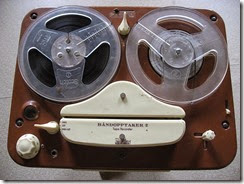 photo by svennevenn
However, here are some of the things you need to consider.what to consider when choosing a recording device
- is it small and convenient and easy to use? – you won’t want to carry around a big, heavy object and have to look in the manual every time in order to use it. If it needs an external microphone that’s one more hassle and one more thing to forget to bring.
- can it use batteries or does it have to run off the mains? – batteries make the device more flexible (no need for power supply), but batteries can run out. Can it be recharged? Or make sure you have spares. Or don’t forget your mains cable!
- how much can you afford? – it’s no good having the latest whizz technology in mind if you can’t afford it. What is available within your budget?
- will the recordings be easy to find afterwards? – if you end up with hundreds of workshop recordings sitting on a shelf (or computer folder) unlabelled and unordered, there’s a good chance you will never get around to using them. Make sure you file them away sensibly so you can find what you want at a later date.
- is it easy to transfer the recordings to a computer? – transferring recordings to a computer means that you can edit them, store them easily and even email them to others or upload them to the web. I used to transfer analogue cassette tapes to my PC, but it takes as long as it does to play the whole cassette. Similarly when I had a digital minidisk, I still had to play it in real time whilst it transferred. With more modern devices you simply drag and drop files and it takes a matter of a few minutes to transfer even long recordings.
- what kind of quality do you need? – if you’re just recording the occasional workshop for your own purposes so you remember a song at a later date then you just need to make sure you can hear the audio clearly (i.e. cheap digital dictaphone or your even your mobile phone will do). Other than that you won’t have to fuss about bit rates and other audio jargon. However, if you want to record something to give (or sell) to others you might need better quality audio (i.e. a better quality digital dictaphone or a dedicated music recording device).
what I use
For years I used a Sony minidisc. The quality was excellent and several of my choirs released professional CDs of live concert recordings. This technology has been largely superseded and, as mentioned above, it takes ages to transfer audio files to a computer.
When I handed over my first choir WorldSong, they kindly clubbed together and bought me a Zoom H4. This is a fine digital recording device which can record up to four tracks simultaneously so would make a great sketch pad for you songwriters out there. I don’t exploit all its capabilities, but use it as a simple stereo work horse for recording concerts and workshops. It records to better than CD quality if you want it to.
Again, this has been superseded by more recent models, but the brand is still a good bet.
If you haven’t got as much money to spare (or don’t need CD quality) then there are plenty of digital dictaphones or voice recorders out there.what do you use?
I’d love to hear about the technology you use for recording choir rehearsals and singing workshops. Do drop by and leave a comment. I’m sure we all have lots to learn!Chris Rowbury
Website: chrisrowbury.com
Facebook: Facebook.com/ChrisRowbury
Twitter: Twitter.com/ChrisRowbury
Read more ...
- is it small and convenient and easy to use? – you won’t want to carry around a big, heavy object and have to look in the manual every time in order to use it. If it needs an external microphone that’s one more hassle and one more thing to forget to bring.
-
String Orchestra – Tallis Day
Listed on February 9, 2015 by Benslow in Blogs!Wed 29 Apr 2015Tutors: Nic Fallowfield and Jenny CurtisRead more ... -
Beth Miller’s Arvon Weeks
Listed on February 4, 2015 by Arvon in Blogs!I first went on an Arvon course in 2001. It was a selected course for people writing novels....
The post Beth Miller’s Arvon Weeks appeared first on Arvon.
Read more ... -
Recording during singing workshops and choir rehearsals – why, what and when?
Listed on February 2, 2015 by Chris Rowbury in Blogs!Despite my strong belief in the oral/ aural tradition, there is an increasing number of handheld recording devices appearing in my singing sessions!
People ask if they can record during a singing workshop; choir members record their parts on their phone whilst learning a new song; I record the songs we’ve learnt at the end of each workshop I run. But what’s the best, and most appropriate way of recording during singing workshops and choir rehearsals?always ask first!
If you want to record during a singing workshop or a choir rehearsal you should always ask first.
Not only is this polite and shows a professional courtesy, but it’s also important because some of the songs may be in copyright and some people might not want to be recorded.1. copyright
If a song you’re learning or singing is in copyright, then you’re not allowed to copy it any form – either by notating it quickly (yes, some people can do this!) or by recording it in any way (see Choirs and copyright: a beginner’s guide for the bewildered).
That means you can’t record the parts on your phone or take a photo of the big lyric sheet pinned on the wall. Even if it’s only for your personal consumption.
Just because you’re learning a song by ear in a workshop doesn’t mean that somebody hasn’t arranged or written the song. It might be the workshop leader or your friend who lives down the road or someone who’s just published an amazing songbook. You can’t just pass these songs on regardless.
Check with the person leading the session: Where does the song come from? Is it OK to pass it on and teach it to others? Is it in a songbook that you should buy?
It’s important to support people who have written and arranged songs as well as making sure that – if it’s a traditional song – you pass on the correct context, meaning, translation, pronunciation, etc.2. other singers
Some people may be very new to singing and lack confidence in their voices. The last thing they’ll want is somebody recording them! So please ask everyone first if it’s OK.
The leader of the session may do that on your behalf or you can ask them directly. A compromise might be for you to record the song at the end with those who don’t want to be recorded stepping back temporarily.what to record and why?
When I first started running choirs I used to be desperate to collect as many songs as possible. At every singing workshop I attended I used to press Record at the beginning and get hours and hours of stuff that I had to wade through at home. At some point I just stopped listening to the recordings I’d made as it would take too much of my time to process them. I started to accumulate a huge library of minidisks that I never listened to.
So I became a little more selective and would only record each part of the song as it was being taught and maybe the whole thing when it came together at the end.
But there was still a lot of processing to do when I got home.
So I stopped taking my recorder to singing workshops and found that I learnt more!
I began to listen more carefully. I could pay more attention because I wasn’t faffing around putting new batteries in. I realised that I got a much better overview of the songs and I was able to remember the ones that I really liked (rather than just recording them all).
If I really, really wanted to teach one of the songs later and didn’t think I’d remembered all the parts, I would ask the workshop leader and they would always be able to point me to a songbook or sheet music or website or even send me recorded parts.learning by ear in a choir
Choir rehearsals are slightly different from one-off singing workshops. You can attend a singing day, learn a few great songs and then never sing them again.
But in a choir there will often be a performance to work towards or simply the joy of singing those oldies that everyone loves. So you’ll need to be able to remember what you’ve learnt.
One good use of recording devices is to record your part as it’s being taught. Then forget it.
Weeks later, when you’ve really got the song under your belt as a choir, you have the option of going back to that original recording if you need to practice before a concert or if you haven’t done a song for a while and it’s gone a bit rusty.
Try to avoid the temptation of going home and practising on your own whilst the choir is learning a new song. It’s possible to be too keen which then makes the whole thing a bit too much like school. Also, learning in a group is more social and allows you to hear how the harmonies work together.process or product? – recording the results of a singing workshop
At the end of every singing day or singing weekend that I run I record all the songs that we’ve learnt together.
Often in the feedback forms I get comments like: “Why didn’t you record it when we’d first nailed it rather than at the very end? It was much better the first time we did it!”
Here is why I record the songs at the end.- If you learn songs quickly (during a day of singing, say) then you will forget them quickly. If I send you a recording of what you learnt you will have something to help you remember after the workshop.
- You will always hear the others in your part most clearly and not get a good sense of the overall sound. By listening to a recording of the workshop you get to realise how good you sound! Also you’ll hear how the whole song fits together.
- Having something to aim for helps to focus the mind. There is also evidence that if you repeat something just before the point of forgetting it, then it is more likely to end up in your long term memory. So getting to repeat all the songs at the end of the workshop rounds off the learning process nicely. It’s NOT about the quality of the final performance then. Yes, there may have been better renditions earlier in the day, but that’s not the point.
Next week I’ll be looking at the kind of recording device that you might want to use.Chris Rowbury
Website: chrisrowbury.com
Facebook: Facebook.com/ChrisRowbury
Twitter: Twitter.com/ChrisRowbury
Read more ...
-
Becoming extraordinary
Listed on January 28, 2015 by Dillington in Blogs!It is always interesting to get feedback. Today a ‘blue-chip’ business client gave us some about how fantastic and inspiring it was to move from the old to the new – from the House across to the Hyde. It is … Continue reading →Read more ... -
Thomas Coram – self-made man and philanthropist
Listed on January 27, 2015 by Dillington in Blogs!On Sunday we enjoyed a brilliant lecture from Lars Tharp on London’s Foundling Hospital. It was not a hospital in the medical sense but a place of refuge, care and sustenance – as in the origins of the word hospitality. … Continue reading →Read more ... -
The singers who didn’t like warm ups (and what became of them)
Listed on January 26, 2015 by Chris Rowbury in Blogs!Once upon a time there were two singers: Olga and Little Erik. They did not like choir warm ups. Olga always came late so she could avoid them. Little Erik did them in a half-hearted way with a scowl on his face.
What became of these two reckless singers? Read on to find out.
Olga had never liked warm ups. She didn’t see the point. Why couldn’t they just get on with the singing?
She hated the choir warm up so much that every week she came late so she could miss it.
Little Erik wasn’t quite as naughty. He came on time every week like he was supposed to and joined in with the warm ups. But he really didn’t like them.
He didn’t stretch quite as much as he could, he refused to make silly faces, and he did the humming very quietly. And he always had a dark scowl on his face.
One week the choir leader sprang a surprise.
She didn’t begin the session with a warm up, but started off with a gentle song instead. Little Erik was confused, but he was very happy that there was no warm up.
When Olga arrived, they were already half way through the song, but she managed to catch up any way. Then to her horror, the choir leader started to do the warm up exercises. She had been tricked!
Little Erik just started to scowl and got on with it. There was no escape for Olga so she had to join in too.
After the warm up, they began the gentle song again.
To their amazement, both Olga and Little Erik found it much easier to sing the song. Their voices felt richer and more resonant and they reached the high notes with ease. They didn’t get as confused with the harmonies and (despite themselves) they even found themselves smiling. What was happening?
Their choir leader had many years experience of leading choirs and working with singers. Every week she carefully planned a series of exercises that helped the singers in her choir prepare to sing.
These exercises included warming up the voice, getting in touch with the breath, making a transition from the everyday world, reducing stress and tension in the body and helping singers to listen more carefully. All so they could have fun and make beautiful music together.
Every exercise had a clear reason and was very carefully thought out.
Even though Olga and Little Erik thought some of the exercises were stupid (sometimes they had to make silly faces which made them look a bit ugly was embarrassing) or a waste of time (like speaking in made-up languages, or clapping in a circle, or running around the rehearsal room), each one had a very specific purpose.
Ever since their choir leader had surprised them that day, Olga and Little Erik realised that the warm ups did make a difference and helped them as singers.
Olga began to turn up on time each week and even began to look forward to the warm ups (she even had fun!). Little Erik began to do the warm ups with more enthusiasm and stopped scowling so much (although he did scowl sometimes each time he started to learn a new song).
Over time, the choir just got better and better and the warm ups became more exciting and more adventurous. The choir’s concerts became better attended and the singers began to smile all the time when they were singing.
And everybody lived (and sang) happily ever after.
THE ENDChris Rowbury
Website: chrisrowbury.com
Facebook: Facebook.com/ChrisRowbury
Twitter: Twitter.com/ChrisRowbury
Read more ...
-
Raw Beginnings
Listed on January 21, 2015 by Dillington in Blogs!This week we celebrate 750th anniversary of the de Montfort parliament. Later this year we celebrate the 800th anniversary of the signing of Magna Carta. Both events are important in British (mainly English) history as both laid down the foundations … Continue reading →Read more ... -
10 exercises guaranteed to get your singers listening more carefully
Listed on January 19, 2015 by Chris Rowbury in Blogs!I went to a workshop recently run by the amazing Su Hart who has spent around 25 years working with the Baka people of Central Africa. Living in the rainforest as they do, listening well is literally a matter of life or death. photo by Rex Bennett
Su’s workshop reminded me yet again that singing is all about listening. But how can we get our singers to listen to each other better? Here are 10 exercises to get you started.
Unlike the Baka, listening well is not a matter of life and death to most choirs, but it IS the key to great singing as an ensemble.
Being a very visual culture, we use our eyes far more than our ears so need a bit of help to remember how to listen properly. Here are some simple exercises you can use with your choir to help them listen better. You can do them separately or blend one into the other.- hear the silence – every song starts from silence. Remind your choir. Ask them to stand in silence and focus on the sounds they can hear from outside the rehearsal room (wind, cars, children playing, dogs), then ask them to re-focus on the sounds from inside the rehearsal space (breathing, creaking floor, shuffling, throat clearing, doors banging).
- hunt the vowels – write each of the five vowels down on separate pieces of paper until you have enough to hand out to every choir member. Ask them to keep their vowel a secret. Then at your command, everyone begins to sing their vowel on any note and sets off to find everyone else in the room who’s singing the same vowel. Remind everyone to sing very quietly.
- sing the same note and disappear – choose a note that everyone can sing comfortably in the same octave for quite some time. Get everyone to stand very close together facing different directions. Mix the usual parts up. Everyone starts to sing on an ‘aw’ as a sustained drone. Tell the singers that after they’ve taken a breath they need to gently ease back into the overall sound. Ask them to match the quality and volume of all those around them. Tell them that you want them to disappear into the sound so it’s not possible to tell who is singing what.
- call and response chords – sing a note, any note and ask the choir to sing it back to you (choose one that the whole choir can sing in the same octave). Comment on their accuracy and repeat. Sing a different note. Then sing two notes and tell them they can choose either (from now on it doesn’t have to be in the same octave). Play with unusual intervals. Comment on their accuracy and repeat. Then try three notes. Start with familiar chords, then less familiar. Comment on their accuracy and repeat. Continue building up chords as far as you want to go.
- play with pauses – in the exercise above begin to leave longer and longer pauses between giving out the notes and when you ask them to sing them back. Don’t allow them to ‘rehearse’ their note by singing it quietly to themselves!
- softly does it – take a song and see how quietly the choir can sing it. Then sing it even quieter. The quieter it gets, the closer they should stand. Try to get them in a huddle rather than standing in normal choir formation. Maybe even put their arms around each other. The closer the better.
- sing in trios – pick a song that everyone in the choir knows really well. Divide into small groups with one from each part, so you will have lots of trios or quartets. Tell them to stay in their small group and to focus within it, but to stand very close to everyone else as reinforcement. Get everyone to sing the song. Give feedback. Then ask the small groups to spread out and make more space between each group. Repeat the exercise. Continue until the groups are as far away from each other as possible. Ask for feedback.
- focus of attention – each time you repeat a song, ask the singers to focus on listening to a different thing, e.g the person standing next to them, the altos, the overall sound of the choir, their own breathing, etc. Gradually ask them to focus on more than one thing at a time.
- stop conducting – one problem with a choir can be that the singers become so used to someone standing in front of them conducting that they stop taking responsibility for themselves and start to believe they can’t do it without that person guiding them. Without telling the choir, start a song off, gradually stop conducting, then walk off and listen. There will be an initial blip probably, but then they’ll manage fine and begin to listen more to each other. Repeat the exercise, but just give the starting notes and tell them they all have to begin together but without you bringing them in.
- turn out the lights – this is really an extreme version of the previous exercise, but it’s also more powerful because by depriving the singers of one sense it helps them to focus on another. Get the choir to sing a song they know really well completely in the dark. You might start it off for them then turn the lights out, but eventually they should be able to do the whole thing completely in the dark.
Remind the choir (and yourself) that listening is key. And if you get a chance, go to a Su Hart workshop – you’ll be amazed at how inspiring it will be.Chris Rowbury
Website: chrisrowbury.com
Facebook: Facebook.com/ChrisRowbury
Twitter: Twitter.com/ChrisRowbury
Read more ...
- hear the silence – every song starts from silence. Remind your choir. Ask them to stand in silence and focus on the sounds they can hear from outside the rehearsal room (wind, cars, children playing, dogs), then ask them to re-focus on the sounds from inside the rehearsal space (breathing, creaking floor, shuffling, throat clearing, doors banging).
-
Bernard Blay
Listed on January 16, 2015 by Benslow in Blogs!We're greatly saddened to announce that Bernard Blay, fine and dearly loved musician, died on 15 January. Sincere condolences to his widow Nona. A celebration of his life will be held on Sunday 15 February. More details available here.Read more ...
Take a look at ...
-
Sketching Holidays
Travel sketching classes and holidays in UK and France. Perfect for solo travellers, friends, or your art group No previous experience needed. Read more ...
-
Promoting residential lifelong learning in the UK since 1983

-
Blogs! | LeisureCourses.net - short courses & residential study breaks in great locations - Part 6
A selection of articles from bloggers within the LeisureCourses.net community


Learning for Leisure
List Your Details
Quick Links
Further Information
Back to Top ↑
LeisureCourses.net 2015